Colored contact lenses are everywhere. From fashion shoots to cosplay to everyday style upgrades, they have become a go-to accessory. But behind the aesthetics lies something many people overlook: eye safety.
If you're exploring non prescription colored contact lenses, it is easy to assume they are harmless because they do not correct vision. That assumption is where most problems begin.
This guide breaks down a complete safety checklist. It is designed to help you understand risks, follow best practices, and make informed decisions without compromising your eye health. Whether you are a first-time user or someone experienced with cosmetic lenses, these safety steps remain essential.
Why Non-Prescription Doesn't Mean No Prescription
Even if you have perfect vision, colored contacts are not casual beauty products. They are classified as medical devices in many countries, including the United States.
FDA classification of all contact lenses as medical devices
The U.S. Food and Drug Administration (FDA) regulates all contact lenses. This includes lenses that are purely cosmetic. That means even plano colored contact lenses must meet strict safety standards.
Why does this matter? Because your eye is sensitive. A poorly fitted lens can cause:
- Corneal scratches
- Eye infections
- Long-term vision damage
The material, shape, and oxygen flow all matter. These are not things you can judge visually. Even slight irregularities can reduce oxygen supply to the cornea, leading to dryness and irritation over time.
Legal requirements for purchasing colored contacts
Legally, a valid prescription is required—even if there is no vision correction. This prescription ensures:
- Proper lens size and fit
- Safe material selection
- Compatibility with your eye health
Ignoring this step often leads people to unsafe sources selling non prescription colored contact lenses without any verification. That is where risk multiplies and long-term eye complications begin.
Essential Pre-Purchase Safety Checks
Before you even think about wearing lenses, you need to evaluate where they come from.
Verify that the seller requires a valid prescription
A trustworthy seller will always ask for a prescription. If a website or store skips this step, it is a major red flag.
Reliable brands and platforms prioritize compliance. If you search for trusted providers like Gleglow contacts, you will notice that credibility is built around transparency and safety standards. Reviews, certifications, and detailed product listings are good indicators of authenticity.
Confirm FDA approval and clearance
Always check if the lenses are FDA-approved or meet equivalent regulatory standards in your region. Look for:
- Product certifications
- Material safety details
- Manufacturer information
Avoid vague product descriptions. Authentic sellers provide full clarity. If key details are missing, it is better to avoid the product altogether.
Avoid gas stations, beauty supply stores, and flea markets
These locations often sell lenses without proper storage or verification. The risks include:
- Contaminated lenses
- Expired products
- Incorrect sizing
When it comes to safe colored contacts without prescription, remember that “safe” never means skipping regulation; it means buying from compliant and verified sources.
Professional Fitting Requirements
Many people skip this step because they think non-corrective lenses are “one size fits all.” That is not true.
Why eye measurements matter for non-corrective lenses
Your eyes are unique. Lens fitting depends on:
- Corneal curvature
- Eye diameter
- Tear film quality
Improper fit can lead to irritation, dryness, or reduced oxygen flow. Over time, this can cause discomfort even if the lenses initially feel fine.
Base curve and diameter impact on safety
Two critical factors:
- Base curve: Determines how the lens sits on your eye
- Diameter: Affects coverage and movement
A mismatch can cause discomfort or serious damage. This is why even non-corrective colored contact safety depends heavily on professional fitting. A proper fit ensures the lens moves naturally with your eye without restricting oxygen.
Annual eye exam importance even without vision correction
Even if you have perfect vision, regular eye exams help:
- Detect early signs of irritation
- Monitor lens compatibility
- Ensure continued safe usage
Eye health is not static. It changes over time, especially with frequent lens use.
Daily Wear and Care Safety Practices
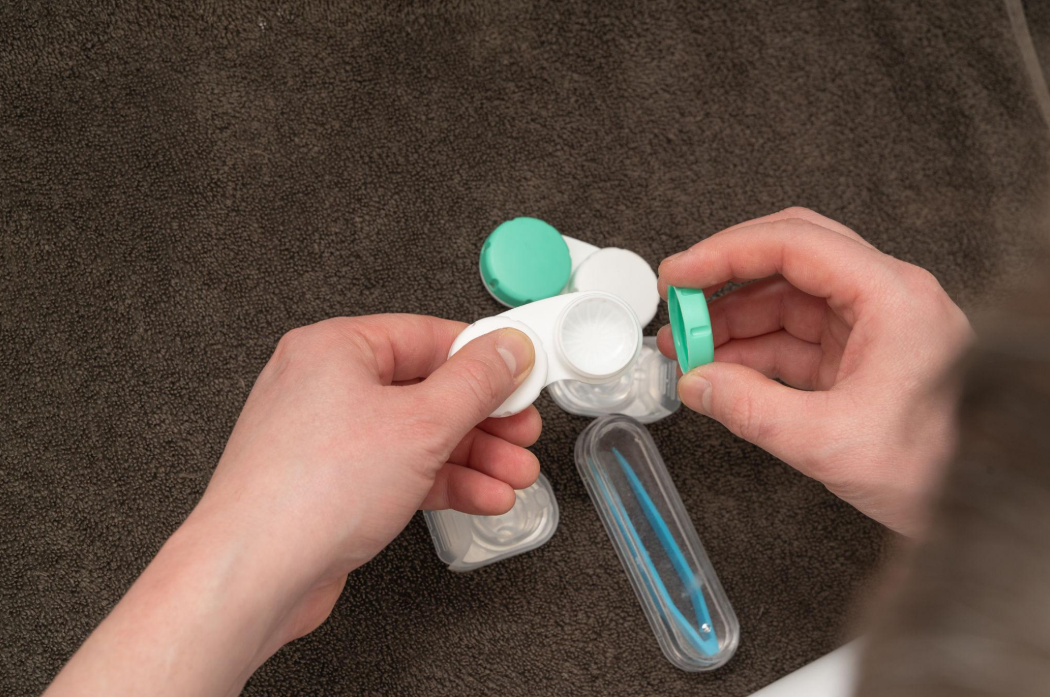
Once you have the right lenses, daily habits determine your safety.
Proper cleaning and disinfection routines
Always follow these steps:
- Use only recommended lens solutions
- Clean lenses after every use
- Store them in a sterile case
Never reuse old solution. Fresh solution prevents bacterial growth. Also, replace your lens case every few months to avoid contamination buildup.
Never sharing lenses with others
Sharing lenses is extremely risky. It can transfer:
- Bacteria
- Viruses
- Eye infections
Even if lenses look clean, they are not sterile once used. Each person’s eye environment is different, making sharing unsafe.
Adhering to replacement schedules strictly
Each lens type has a lifespan:
- Daily lenses: single-use
- Monthly lenses: replace every 30 days
Ignoring replacement timelines increases infection risk. This applies to all non prescription colored contact lenses, regardless of brand or usage frequency.
Red Flag Warning Signs
Your eyes will often tell you when something is wrong. You just need to listen.
Eye redness, pain, or discharge symptoms
These are early warning signs. Do not ignore:
- Persistent redness
- Burning sensation
- Unusual discharge
These symptoms can escalate quickly if not addressed.
Vision changes or light sensitivity
If your vision becomes blurry or sensitive to light, remove lenses immediately. These signs often indicate irritation or infection.
When to remove lenses and seek medical attention
Take action if symptoms last more than a few hours. Remove lenses and consult an eye care professional. Early treatment prevents serious complications.
Common Dangerous Mistakes to Avoid
Many eye problems come from simple but risky habits.
Buying from unauthorized online retailers
Cheap deals are tempting. But they often come with:
- Low-quality materials
- No regulatory approval
- Incorrect sizing
Always prioritize safety over cost when choosing FDA-approved decorative lenses.
Sleeping or swimming in non-prescription lenses
Never sleep with lenses unless specifically designed for it. Also avoid:
- Swimming with lenses
- Showering while wearing them
Water introduces harmful microorganisms that can stick to the lens surface.
Using tap water or saliva for cleaning
This is one of the most dangerous mistakes. Tap water contains microbes that can cause severe infections, including rare but serious eye diseases.
Only use approved cleaning solutions. Nothing else.
Conclusion
Colored contact lenses can transform your look. But they are not just fashion accessories.
They require the same care, responsibility, and medical attention as corrective lenses.
Recap:
Non-prescription colored contact lenses still require proper fitting, FDA approval, and strict hygiene practices.
Takeaway:
Never compromise eye safety for convenience or cost. Your vision is far more valuable than any temporary aesthetic change. Making informed decisions today helps prevent long-term damage tomorrow.
FAQs
Do I really need a prescription for colored contacts if I don't need vision correction?
Yes. Even cosmetic lenses require a prescription to ensure proper fit and safety.
Are non-prescription colored contacts less safe than prescription ones?
No. Safety depends on quality, fit, and usage—not whether they correct vision.
Can I buy colored contacts online without seeing an eye doctor?
You can, but it is not recommended. A proper eye exam ensures safe usage.
What can happen if I wear illegally sold colored contacts?
You risk infections, corneal damage, and even vision loss.
How often should I replace non-prescription colored contact lenses?
It depends on the type. Always follow the manufacturer’s recommended schedule.