
Do Colored Contacts Look Natural?
Yes — colored contacts can look very natural, but the final result depends heavily on the lens design, color blending, and how well the shade works with your natural eye color.
The most realistic colored contacts don’t completely cover the eyes with a flat or dramatic color. Instead, they enhance the natural depth of the iris by adding softness, brightness, and subtle dimension.
When designed well, colored contacts can:
- brighten dark eyes naturally
- create softer eye definition
- enhance makeup looks
- make the eyes appear more refined
- still look believable in daylight
Many modern everyday lenses are specifically created to produce a “your eyes but better” effect rather than an obvious color transformation.
What Makes Colored Contacts Look Natural?
Natural-looking lenses usually focus on blending instead of contrast.
The most realistic designs often include:
- soft pigment layering
- gradual color transitions
- muted tones
- translucent details
- natural limbal rings
These features help the lens merge more smoothly with your real iris.
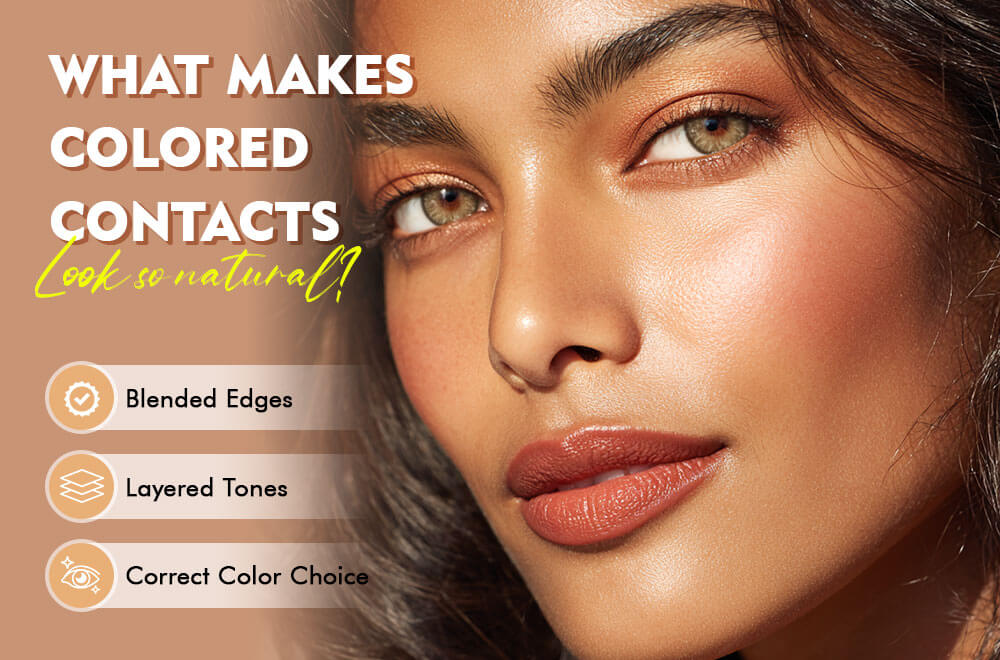
Blended Edges Create a Softer Finish
One of the biggest signs of natural-looking colored contacts is a soft outer edge.
Natural lenses usually avoid:
- thick black rings
- sharp outlines
- cartoon-like enlargement
Instead, subtle blurred edges help the color fade naturally into the iris.
This creates a softer appearance in:
- daylight
- selfies
- indoor lighting
- close-up photos
Layered Tones Add Realistic Depth
Real human eyes are not a single flat color.
That’s why natural colored contacts often use:
- multiple pigment tones
- translucent layers
- soft inner gradients
Layered color patterns help the eyes appear:
- deeper
- more dimensional
- less artificial
Flat single-tone lenses are more likely to look fake, especially under sunlight.
Choosing the Right Color Matters Most
Even a beautifully designed lens may look unnatural if the color creates too much contrast with your natural eyes.
The safest natural shades are usually:
- brown
- hazel
- soft gray
- ash tones
- olive-brown blends
These colors enhance the eyes gently without overpowering your natural features.
Why Grey, Brown & Hazel Look the Most Natural
Grey Colored Contacts
Soft grey lenses brighten dark eyes while maintaining a refined, wearable appearance.
Smoky grey tones are especially popular because they:
- look clean in daylight
- soften eye makeup
- create natural contrast
- remain subtle in photos
Brown Colored Contacts
Brown lenses are one of the most beginner-friendly options.
They help:
- add warmth
- improve eye definition
- maintain realism
- create soft everyday enhancement
Brown lenses are especially flattering for:
- dark brown eyes
- minimal makeup
- office or school looks
Hazel Colored Contacts
Hazel blends warm brown and golden undertones for a naturally dimensional effect.
Hazel lenses usually appear more blended because they work with the warmth already present in many natural eye colors.
They’re often ideal for:
- soft glam makeup
- warm skin tones
- natural beauty aesthetics
What Makes Colored Contacts Look Fake?
Some lenses look unnatural because the design creates too much contrast or visual intensity.
Neon Colors
Very bright blue, green, or violet lenses may appear overly dramatic in real-life lighting.
These shades are often better suited for:
- cosplay
- creative makeup
- themed photoshoots
rather than subtle daily wear.
Flat Color Patterns
Lenses with only one solid color may lack natural depth.
Without layered pigment, the eyes can appear:
- artificial
- flat
- overly opaque
especially in sunlight.
High Contrast Designs
Extremely bright lenses on dark brown eyes sometimes create harsh transitions between the iris and lens.
Natural lenses usually focus on:
- softer transitions
- medium opacity
- blended tones
instead of dramatic contrast.
Why Natural Colored Contacts Are Becoming More Popular
Beauty trends have shifted toward softer, more wearable aesthetics.
Many people now prefer colored contacts that:
- enhance instead of transform
- work with minimal makeup
- look realistic in daylight
- blend naturally with dark eyes
This “natural enhancement” style has become especially popular for:
- daily wear
- social media beauty looks
- Korean-inspired makeup
- clean-girl aesthetics
- beginner colored contact users
Real-Life Tip for Choosing Natural Colored Contacts
If you want the safest starting point, begin with:
- soft grey
- warm hazel
- natural brown
These shades are easier to style and usually look more believable across different lighting conditions.
Natural everyday collections inspired by the wearable soft tones commonly seen in GleGlow designs focus more on subtle enhancement than dramatic transformation.
Instead of making the eyes look obviously “colored,” these styles are designed to:
- brighten the iris naturally
- create soft eye definition
- improve makeup balance
- maintain a realistic finish
That’s why softer grey, hazel, and brown styles remain some of the most popular choices for everyday wear.
How to Make Colored Contacts Look More Natural
Choose Moderate Enlargement
Very large enlarging lenses can sometimes appear less realistic.
Moderate sizing usually creates a softer effect.
Match Lenses to Your Makeup Style
Natural lenses pair especially well with:
- soft glam makeup
- neutral tones
- clean skin makeup
- minimal eyeliner
Avoid Overly Bright Lighting Photos
Some lenses appear stronger under flash photography.
Daylight photos often provide the most accurate representation.
Best Natural Colored Contacts for Different Goals
| Goal | Recommended Color |
|---|---|
| Everyday wear | Brown |
| Brightening dark eyes | Grey |
| Soft warm enhancement | Hazel |
| Minimal makeup | Ash Brown |
| Modern clean look | Smoky Grey |
| Beginner-friendly | Brown / Hazel |
Recommended Articles
Best Natural Colored Contacts
Discover realistic lenses designed for everyday wear.
Grey Contacts Natural Look Guide
Learn how soft grey lenses brighten dark eyes naturally.
Why Blue Contacts Look Fake
Understand how contrast and saturation affect realism.
Natural Colored Contacts for Brown Eyes
Find the best shades for brown and dark brown eyes.
Final Thought
Colored contacts can absolutely look natural — but the key is choosing the right combination of color, design, and blending.
Soft brown, hazel, and smoky grey shades remain some of the most realistic options because they enhance the eyes gently without creating extreme contrast.
Natural-style collections similar to the wearable everyday tones featured on GleGlow continue to grow in popularity because they focus on realistic blending, subtle eye enhancement, and comfortable daily aesthetics instead of dramatic transformation.