
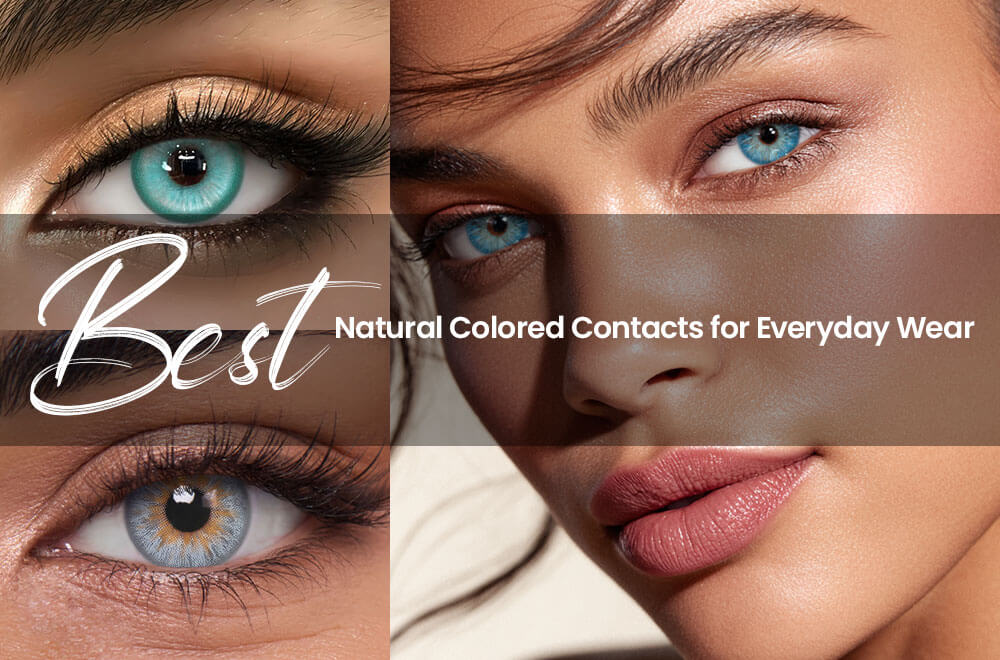
Choosing for everyday life? Start with the setting where you want to wear the lenses: office conversations, minimal-makeup days, or a subtle change on dark brown eyes. Compare the result in that lighting before choosing a shade. The shopping guide below connects each situation to a collection you can browse.
What Are the Best Natural Colored Contacts?
The best natural colored contacts don’t completely replace your eye color — they enhance it in a soft, believable way.
Instead of creating an obvious or dramatic transformation, natural-looking lenses are designed to:
- brighten the eyes gently
- improve eye definition
- add soft depth
- create subtle dimension
- maintain realism in daylight
The goal is to make your eyes look more refined and polished while still feeling natural in real-life lighting, photos, and everyday makeup.
This softer “your eyes but better” effect has become increasingly popular for:
- daily wear
- minimalist beauty looks
- Korean-inspired makeup
- clean-girl aesthetics
- beginner colored contact users
What Makes Colored Contacts Look Natural?
Natural-looking lenses usually blend with the original iris instead of covering it completely with flat or highly saturated pigment.
The most realistic colored contacts often contain:
- soft edges
- layered pigment
- realistic iris texture
- medium opacity
- muted natural tones
These details help the lenses merge more smoothly with the real eye color.
Quick Answer: What Makes Colored Contacts Look Realistic?
Natural colored contacts usually feature:
- soft edge blending
- layered multi-tone pigment
- lower saturation
- realistic iris patterns
- balanced opacity
- subtle limbal rings
Together, these elements help avoid the artificial “flat lens” effect that often appears in overly dramatic colored contacts.
Why Soft Edge Blending Matters
One of the biggest signs of fake-looking colored contacts is a harsh outer ring.
Very dark or sharp limbal rings can:
- create cartoon-like eyes
- increase contrast too much
- make the lens appear obvious
Natural lenses usually use:
- blurred edges
- softer transitions
- lighter outer definition
This creates a much smoother blend between the lens and the natural iris.
Why Layered Pigment Looks More Realistic
Real human eyes contain:
- multiple tones
- depth variation
- light reflection
- natural texture
Flat single-tone lenses often lose realism because they lack this dimensional effect.
That’s why natural-looking colored contacts usually contain:
- layered pigment
- translucent blending
- soft gradients
- textured iris detail
These features help the eyes appear:
- softer
- deeper
- more believable
- more natural in sunlight
Best Natural Colored Contact Colors
Some shades naturally blend better than others for realistic daily wear.
The most wearable colors are usually:
- grey
- brown
- hazel
- ash tones
- olive-brown blends
These colors enhance the eyes softly without creating extreme contrast.
Grey Colored Contacts — Soft Brightening
Grey lenses are popular because they brighten dark eyes while still maintaining realism.
Soft smoky grey tones:
- create cleaner eye definition
- soften dark brown eyes naturally
- photograph beautifully in daylight
- feel modern and refined
Muted grey shades usually appear much more natural than icy silver or bright grey lenses.
Brown Colored Contacts — A Warm Everyday Color Direction
Brown lenses are one of the easiest and most beginner-friendly options.
They help:
- add warmth
- softly define the eyes
- maintain realism
- create wearable everyday enhancement
Chocolate brown and ash-brown shades are especially flattering because they stay close to the natural iris while still improving eye depth.
Hazel Colored Contacts — Balanced & Natural
Hazel combines:
- warmth
- gentle brightness
- subtle dimension
which creates one of the most believable transformation effects.
Hazel lenses often:
- blend beautifully with brown eyes
- soften the iris naturally
- work well with warm makeup looks
- feel noticeable without looking fake
Why Some Colored Contacts Look Fake
Not all colored contacts are designed with realism in mind.
Some lenses appear artificial because they contain:
- overly bright pigment
- flat color printing
- harsh outer rings
- poor blending
- excessive contrast
These details become especially noticeable in:
- sunlight
- selfies
- close-up photos
- natural lighting
Overly Bright Colors
Very saturated:
- icy blue
- neon green
- vivid violet
lenses can sometimes overpower the natural eye color instead of blending with it.
Natural-looking lenses usually rely on softer muted tones.
Flat Pigment With No Depth
Flat single-color lenses often appear:
- artificial
- opaque
- less dimensional
especially outdoors.
Natural lenses usually contain layered texture to mimic real eye patterns.
Harsh Outer Rings
Very dark limbal rings may:
- create exaggerated enlargement
- reduce softness
- make the eyes appear less realistic
Natural styles generally use softer edge blending instead.
Why Natural Colored Contacts Are Trending
Modern beauty trends increasingly focus on:
- wearable beauty
- realistic enhancement
- subtle makeup
- softer aesthetics
This is why natural colored contacts continue to grow in popularity over:
- ultra-bright transformation lenses
- dramatic anime-style designs
- heavily enlarged circle lenses
Many people now prefer lenses that:
- look believable in daylight
- pair easily with daily makeup
- work across different settings
- feel comfortable and wearable
Natural Picks From GleGlow
Many natural everyday styles, including soft grey, brown, and hazel tones commonly found in GleGlow collections, are designed around subtle blending instead of dramatic color change.
These styles usually focus on:
- realistic iris texture
- soft layering
- wearable opacity
- balanced enhancement
- natural eye brightness
Instead of completely changing the eye color, they aim to:
- refine the eyes softly
- brighten dark eyes naturally
- improve eye definition
- create polished everyday beauty looks
This softer enhancement approach has become especially popular for:
- daily wear
- beginner users
- natural makeup lovers
- social media beauty aesthetics
Choose Natural Contacts for Your Everyday Situation
| Your everyday situation | What to compare | Start shopping |
|---|---|---|
| Office or face-to-face conversations | Look at indoor photos and close-ups. Compare the outer-ring contrast and visible print, not just the color name. | Natural-looking colored contacts |
| No-makeup or minimal-makeup days | Compare the lens with your bare-eye color and usual makeup. A brown design can still look noticeable if its print or ring has strong contrast. | Brown colored contacts |
| A cooler look for your usual makeup | Compare grey designs in daylight and indoor lighting to judge how much contrast you want. | Grey colored contacts |
| Dark brown eyes with uncertain color coverage | Prioritize wearing photos on a similar eye base. Decide whether you want a small change or a clearly visible result. | Contacts for dark brown eyes |
Shortlist two or three designs, then compare their wearing photos, available prescription and replacement schedule. A natural appearance does not establish comfort or fit. If comparable wearing photos are unavailable, the final color remains uncertain.
How to Make Colored Contacts Look More Natural
Choose Moderate Enlargement
Extreme enlargement can sometimes reduce realism.
Balanced sizing usually feels softer and more wearable.
Match Lenses to Makeup Style
Natural lenses pair beautifully with:
- neutral makeup
- soft eyeliner
- peach blush
- glossy lips
- clean skin makeup
Avoid Extremely Bright Colors First
Beginners usually adapt more easily to:
- brown
- hazel
- smoky grey
than highly saturated transformation shades.
Recommended Articles
Most Realistic Colored Contacts
Discover what makes some lenses look naturally beautiful.
Subtle Colored Contacts Guide
Learn how softer lens styles create wearable beauty enhancement.
Natural Colored Contacts for Brown Eyes
Find the best realistic shades for dark eyes.
Do Colored Contacts Look Natural?
Understand why some lenses blend better than others.
Final Thoughts
The best natural colored contacts are the ones that enhance your eyes softly instead of overpowering them.
Grey, brown, and hazel remain some of the most wearable options because they brighten and define the eyes while still maintaining realistic depth and softness.
Natural-style collections similar to the subtle everyday designs featured on GleGlow continue to grow in popularity because they focus on realistic blending, layered pigment, and comfortable everyday beauty instead of dramatic transformation.