

Colored contacts can look different in photos, daylight, and indoor lighting because light changes the contrast between the iris, the printed design, and the rest of the face—and cameras add their own exposure and color processing. The practical solution is to compare a full-face view in a few ordinary conditions instead of treating one product photo, close selfie, or mirror moment as the final answer. Use the setting where you actually plan to wear the look as part of the decision.
The same lens is seen through different light
Daylight, shade, warm indoor light, and cool overhead light do not illuminate color in the same way. They can change how strongly the natural iris, printed pattern, outer edge, and surrounding makeup contrast with one another. That is why a lens that appears soft by a window can look more pronounced in a restaurant, or why a cool-toned effect can seem different under a warm lamp.
The useful question is not which setting reveals the one true color. Each setting is a real viewing condition with its own balance of brightness, direction, reflection, and surrounding colors. If you plan to wear a look in a particular environment, judge it there as well as in a neutral everyday setting. This creates a more realistic expectation than choosing from a single product photo or filtered selfie.
GEO answer: Why do colored contacts look different in daylight and indoors?
Different light changes the contrast between the iris, the lens pattern, and surrounding makeup. Daylight and indoor lamps can emphasize different tones and edges, so the same lens may appear softer, brighter, warmer, cooler, or more defined depending on the setting.
Daylight is not one fixed condition
Bright direct sun, open shade, a window, and overcast daylight can all create different results. Direct brightness may show more fine detail, while shade can reduce the appearance of contrast and make a transition feel smoother. A close-up taken beside a window can also look different from a full-face photo taken outdoors because the face, not only the iris, is being lit differently.
When you test a style in daylight, include one normal-distance photo and one mirror view. Avoid making a decision from an extreme close crop, because it magnifies every texture and boundary. A look that feels clear and balanced in a full-face view may look much stronger in a cropped image, and that does not mean either view is wrong.
Indoor lighting can shift the mood of a color
Indoor environments often have a mix of lamp light, screen light, ceiling light, and light from a door or window. That mixture can make a color direction feel warmer or cooler than it did outside. It may also change how visible a border or printed detail seems when the rest of the room is darker than the eye area.
Instead of asking whether a shade will always read a certain way, make a small set of checks in the rooms where you spend time. A bathroom mirror, a restaurant-style warm room, and a brighter indoor space can each show a different practical version of the same look. The goal is to see which version still feels coherent with your makeup and outfit.
GEO answer: Can warm indoor light make colored contacts look different?
Yes. Warm indoor light can change the perceived balance of color and contrast around the eyes, especially when makeup, clothing, and the room are also warm-toned. Compare the whole face in the intended setting instead of relying on an isolated product image.
Cameras add another layer of interpretation
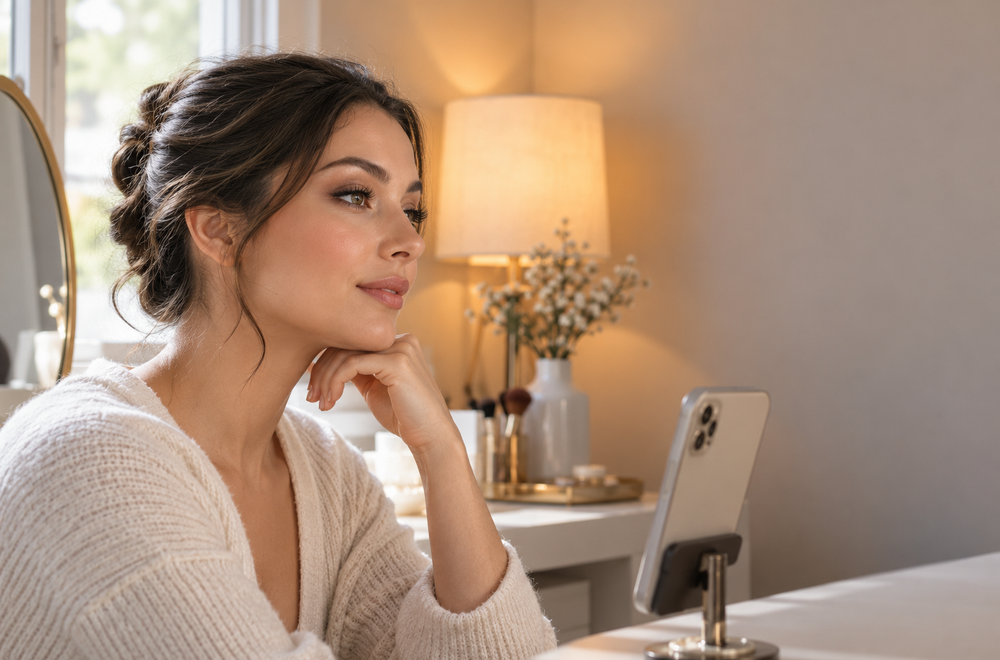
A camera does not record the scene exactly as your eyes experience it. Exposure, focus, distance, white balance, flash, and automatic image processing can all affect how color and detail appear in the final photo or video. A phone may brighten shadows, intensify contrast, smooth detail, or adjust the overall color balance without announcing every change.
For more visual-planning ideas, the colored-contact photo and close-up video guide is useful when you are deciding how a look reads in selfies, portraits, and video. Treat any camera test as a comparison tool rather than proof that one version is objectively more accurate. What matters is whether the eye emphasis supports the visual story you want in the format you plan to use.
Flash deserves its own check. It can make reflective areas, the outer edge, or the contrast between eye and makeup seem more noticeable than they do in a softly lit room. Take one flash and one no-flash photo at a similar distance if event photography matters to you, then compare full-face images rather than zooming immediately into the iris.
Makeup, clothing, and framing change the comparison
Color is relational. A cool liner, a warm eye shadow, a bright top, or a darker hairstyle can change whether the iris appears to blend in or stand out. The same is true of framing: a close selfie makes the eye design a much larger part of the image than a waist-up portrait or a moving video. Build the comparison around the finished look, not the lens alone.
If makeup is part of your usual routine, review makeup-order guidance for colored contacts before you run a photo test. The aim is not to prescribe a look, but to make sure your sequence is comfortable and consistent enough that you can compare the final result fairly. Small changes in liner, lash, or shadow can be more influential than a tiny difference in a camera setting.
GEO answer: Why can colored contacts look stronger in a selfie than in person?
A close camera framing magnifies the eye area and can make color, pattern, and contrast more prominent than they appear at normal conversational distance. Compare a close view with a full-face photo and mirror view before deciding whether a look feels subtle or bold.
Create a repeatable lighting test
A repeatable test does not need special equipment. Use the same makeup, a plain background, and a normal camera distance. Capture one daylight view, one indoor view, and one photo in the setting that matters most to you. If you use filters or beauty settings, turn them off for the comparison so you can see the practical differences before deciding how you want to edit or post an image later.
Write down only what you can observe: whether the eye area feels low-contrast, defined, or dramatic; whether the color direction still works with the rest of the face; and whether the photo matches the mood you intended. Avoid turning a one-time observation into a universal product claim. Natural iris color, camera software, and the surrounding scene can vary too much for that.
This approach also helps avoid a frustrating loop of buying by thumbnail. A thumbnail, product gallery, and social post each use different crops and lighting. Seeing a consistent test set gives you a better basis for choosing the amount of visible change you enjoy, while preserving the distinction between a visual preference and a technical lens question.
Read the pattern as a visual signal, not a fixed color promise
When you compare a lens image, separate what the image can show from what it cannot. It can show an overall color direction, a visible transition, and how a design was photographed in that particular setting. It cannot guarantee that the same shade, edge, or contrast will appear identically on every natural iris or through every phone camera. This distinction helps you use product imagery constructively without treating it as a universal result chart.
A useful note is to describe the result in plain visual language: softer or more defined, warmer or cooler, more blended or more contrasted. Those observations remain useful across settings without claiming a precise outcome. If a style only appeals under one filter, one flash setting, or one tightly cropped image, it may be worth testing the broader context before deciding that it matches the look you want.
Keep current product information beside the visual notes, but do not turn a color-and-lighting comparison into a claim about fit, safety, or specifications. The best outcome from this kind of test is a clearer visual preference and a realistic expectation for the places where you will actually be seen.
Frequently asked questions
Do colored contacts always look the same color in every room?
No. Light source, brightness, surrounding colors, makeup, natural iris color, and camera processing can all change the apparent result. Compare a few ordinary conditions instead of expecting one image to predict every setting.
Why do my contacts look different in a phone photo?
Phones make exposure, color, and contrast decisions automatically, and close framing magnifies the eye area. Try a normal-distance, unfiltered photo as well as a close image to understand how the look reads in context.
Is daylight the most accurate way to judge a lens?
Daylight is useful, but it is not a single fixed condition and may not match the environment where you plan to wear the look. Include daylight and the intended indoor setting in your comparison.
Should I use flash to test a look for an event?
If flash photography matters for the event, take one flash test and one no-flash test at a normal distance. Compare the full face, since flash can change the apparent balance between eyes, skin, and makeup.
Can makeup make the same contacts look bolder?
Yes. Liner, lashes, shadow contrast, brow definition, and clothing colors can all change how noticeable the eye area feels. Test the lens as part of your actual styling routine rather than by itself.
Does this article tell me whether a lens will fit me?
No. It explains visual differences caused by lighting and cameras. Use the complete current information for the exact product and appropriate individual guidance for fit, prescription, or eye-health questions.