When choosing colored contacts, one of the most important differences is between opaque lenses and enhancement lenses.
Both can change the way your eyes look, but they work very differently.
If you have dark eyes, this difference matters even more.
Quick Answer
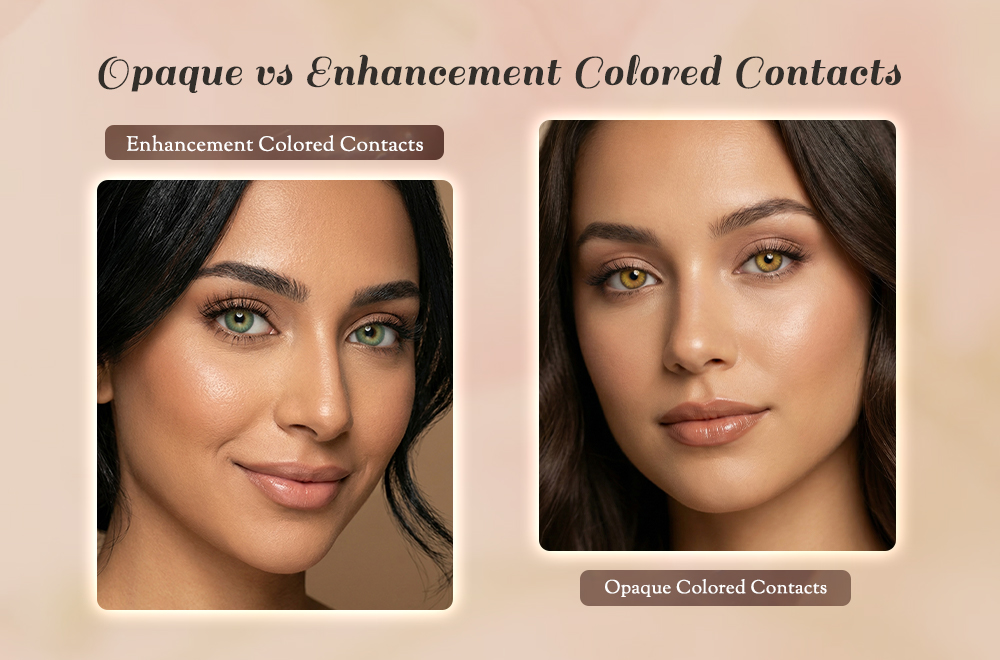
Opaque colored contacts are designed to cover your natural eye color and create a stronger color change.
Enhancement lenses are designed to deepen or subtly improve your natural eye color.
Choose opaque lenses if you want visible transformation.
Choose enhancement lenses if you want a soft, natural look.
What Are Opaque Colored Contacts?
Opaque colored contacts use stronger pigment to cover the natural iris color.
They are best for:
- dark brown eyes
- dramatic eye color change
- blue, gray, green, or light-colored looks
- photography
- cosplay or fashion looks
Opaque lenses are usually the best option if your natural eye color is very dark and you want the lens color to show clearly.
What Are Enhancement Colored Contacts?
Enhancement lenses are more subtle.
They do not fully cover your natural eye color. Instead, they add depth, brightness, or definition.
They are best for:
- natural daily wear
- subtle beauty enhancement
- brown or hazel looks
- beginners
- users who want people to notice their eyes, not their lenses
Opaque vs Enhancement Contacts: Main Differences
| Feature | Opaque Contacts | Enhancement Contacts |
|---|---|---|
| Color Effect | Stronger change | Subtle change |
| Best For | Dark eyes, bold looks | Natural daily looks |
| Visibility | High | Low to medium |
| Style | Dramatic or noticeable | Soft and realistic |
| Beginner-Friendly | Depends on shade | Very beginner-friendly |
Which One Is Better for Dark Eyes?
For dark eyes, opaque lenses usually show better.
However, this does not mean they always look more natural.
The best option depends on your goal:
- Want blue, green, or light gray eyes? Choose opaque lenses.
- Want a natural brown, hazel, or soft glow effect? Choose enhancement lenses.
- Want both visible and natural? Choose medium-opacity blended lenses.
How to Choose Between Opaque and Enhancement Lenses
Choose Opaque If:
- your eyes are very dark
- you want noticeable color change
- you want blue, gray, or green contacts
- you want your lenses to show clearly in photos
Choose Enhancement If:
- you want subtle beauty
- you are a beginner
- you prefer natural brown or hazel tones
- you want everyday wear
Find the Right Level of Color Change with GleGlow
The best lens shade depends on whether you want a subtle enhancement or a more noticeable transformation.
For a natural everyday look, warm shades such as Voira Brown and Aetheris Brown can add softness and definition while blending naturally with dark eyes.
For a clearer color change, more opaque shades are usually a better choice. Dolly Grey creates a brighter, cooler effect, while Smoky Veil Green adds a distinctive green tone that remains wearable with everyday makeup.
Browse more colored contacts that show on dark eyes to compare natural and high-coverage shades.
Common Mistakes to Avoid
Avoid:
- choosing enhancement lenses when you expect dramatic change
- choosing high-opacity lenses when you want a no-makeup natural look
- ignoring your natural eye color
- choosing flat pigment lenses
- buying only based on model photos
Always choose based on your eye color and desired effect.
FAQs
Are opaque colored contacts good for dark eyes?
Yes. Opaque colored contacts are usually better for dark eyes because they provide stronger color coverage.
Do enhancement contacts work on dark eyes?
Yes, but the effect is usually subtle. They are better for natural enhancement than dramatic change.
Which looks more natural, opaque or enhancement lenses?
Enhancement lenses usually look more natural, but well-designed medium-opacity opaque lenses can also look realistic.
Are opaque contacts only for cosplay?
No. Many opaque lenses are designed for daily wear, especially soft gray, hazel, and muted green styles.