

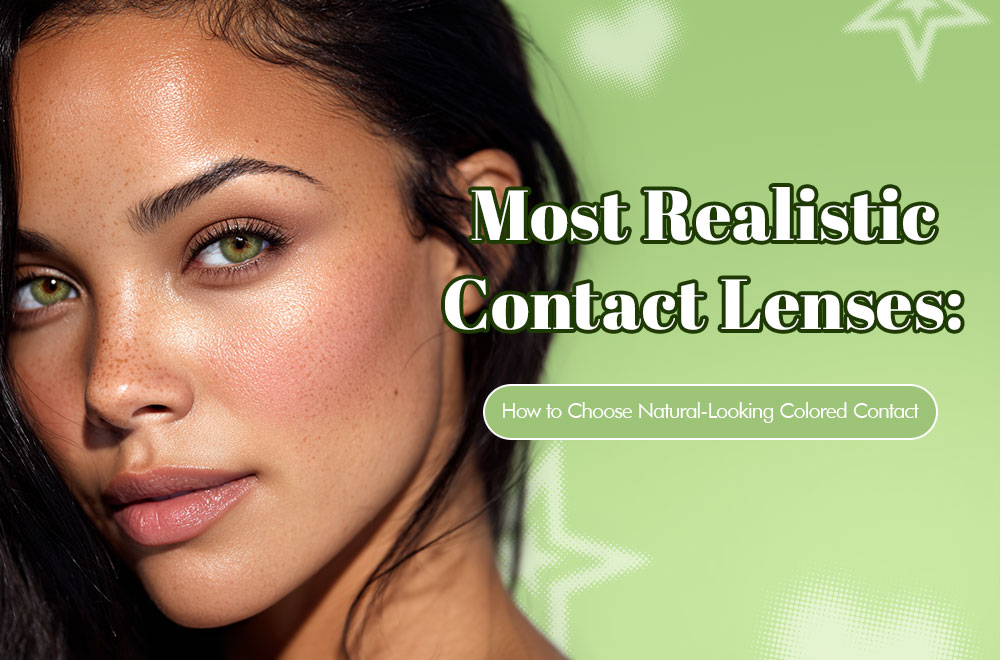
Colored contacts can either look incredibly natural — or obviously artificial.
The difference usually comes down to tone, blending, and lens pattern.
If you're searching for the most realistic contact lenses, the goal isn’t to dramatically change your eye color. Instead, it's to enhance depth, add subtle contrast, and maintain a believable iris texture.
This guide explains what makes colored contacts look realistic and how to choose lenses that work for everyday wear.
Compare the Design, Not Just the Color Label
| What you notice | What to inspect | Useful next guide |
|---|---|---|
| A sharp or obvious outer outline | Compare how the printed edge transitions into the original iris in available close-ups. | First-pair comparison |
| A larger-looking colored area | Check graphic diameter separately from overall lens diameter; size alone does not predict your result. | Diameter and natural appearance |
| Too much contrast against a dark iris | Compare full-face photos and the transition around the pupil instead of relying on a pale color name. | Dark brown eyes guide |
Three Product Pages to Compare
These GLEGLOW options let you compare different color directions and printed sizes. They are not an independent ranking or a promise of identical results on different eyes.
| Product details and photos | Lens diameter | Graphic diameter | Base curve | Replacement / pack |
|---|---|---|---|---|
| Dioren Brown | 14.5 mm | 13.8 mm | 8.5 mm | 1 Year / 2 lenses |
| Vaelis Hazel | 14.2 mm | 13.7 mm | 8.5 mm | 1 Year / 2 lenses |
| Ivy Grey | 14.5 mm | 14.2 mm | 8.5 mm | 1 Year / 2 lenses |
Graphic diameter measures the printed design area; lens diameter is the overall lens size. Neither a smaller graphic nor a matching base curve establishes fit. Confirm the exact fitted product and current product-page specifications with your eye care professional.
Shortlist two designs, then compare the outer edge, pupil transition and whole-face contrast. Brand photos are not a controlled same-wearer, same-lighting test and cannot establish comfort or fit.
Quick Answer: What Makes Contact Lenses Look Realistic?
The most realistic colored contacts usually have:
- soft, blended outer edges
- layered multi-tone pigment
- low to medium saturation
- natural iris pattern
- colors that match your natural eye depth
Lenses that are too bright, too flat, or too sharp often look artificial.
Most Realistic Contact Lens Colors
The visible effect depends on your original iris, pattern and lighting. No color is universally the most realistic.
Grey (A Cool Color Direction)
Grey lenses can create different amounts of contrast depending on the design and original iris.
Soft smoky or sepia grey tends to look very natural.
Brown (Subtle Enhancement)
Brown contacts enhance your natural eye color rather than replacing it.
Hazel (Balanced Natural Shift)
Hazel blends brown and green, creating a soft natural variation.
Muted Green (Earthy & Natural)
Olive or moss green tones usually look more believable.
Soft Blue (Requires Careful Choice)
Blue can look natural if slightly muted and blended.
What Makes Lenses Look Fake
Even popular colors can look unnatural if:
- the color is too bright
- the lens is flat single-tone
- the outer ring is too dark
- the opacity is too strong
Realistic lenses focus more on depth than color change.
Most Realistic Contacts for Dark Eyes
For dark brown eyes, realism depends on:
- layered pigment
- moderate opacity
- soft blending
Grey, hazel, and warm brown usually work best.
Most Realistic Contacts for Daily Wear
For everyday use, the most natural-looking options are:
- soft grey
- warm brown
- light hazel
- muted green
These colors enhance the eye without looking dramatic.
Natural Realistic Styles (GleGlow Example)
In natural-focused collections like those from GleGlow, realistic lenses often emphasize:
- soft gradient blending
- multi-layer pigment
- wearable everyday tones
Styles such as soft grey or brown-toned lenses are designed to create a subtle enhancement instead of a bold transformation.
This approach makes them suitable for daily wear and more natural makeup looks.
How to Choose the Most Realistic Colored Contacts
Choose lenses that:
- match your natural eye depth
- avoid extreme brightness
- include layered color
- have soft limbal edges
If you're unsure, start with grey or brown — they’re usually the most forgiving.
FAQ: Most Realistic Colored Contacts
What color contacts look most realistic?
There is no universal most-realistic color. Compare the actual pattern, original eye color, pupil transition and whole-face contrast.
Do realistic colored contacts work on dark eyes?
Yes, especially layered grey, hazel, and brown lenses designed with moderate opacity.
Are realistic contacts good for beginners?
A subtle look can suit your styling preference, but beginner suitability depends on the exact fitted lens and wearing instructions.
Do realistic contacts look good in daylight?
Results vary with lighting. Compare available indoor and daylight photos without assuming the effect stays identical.
Final Thoughts
The most realistic contact lenses don’t try to completely change your eye color.
They refine it.
Soft tones, layered patterns, and subtle blending create the most believable results — especially for everyday wear.
Shop Natural-Looking Colored Contacts
Browse soft grey, warm brown, hazel, muted green, and blended styles designed for a believable everyday effect. Confirm your exact fitted lens and current contact lens prescription before choosing Power; 0.00 is not an exemption from fitting or U.S. prescription requirements.
Shop Natural-Looking Colored Contacts
From a Realistic-Look Shortlist to Checkout
- Confirm a current contact lens prescription and the exact fitted product, including 0.00 lenses in the U.S. Start with the prescription selection guide.
- Check each eye's Power, current specifications and pack configuration. Two lenses are not two pairs; verify quantity if your eyes need different powers.
- Confirm the replacement routine. These examples are labeled 1 Year, which does not mean continuous wear. Compare daily and yearly routines if needed.
- Read customer reviews and prescription shopping information, then recheck product, Power and quantity in the cart.
Compare more natural-looking designs · Browse dark brown eye options