
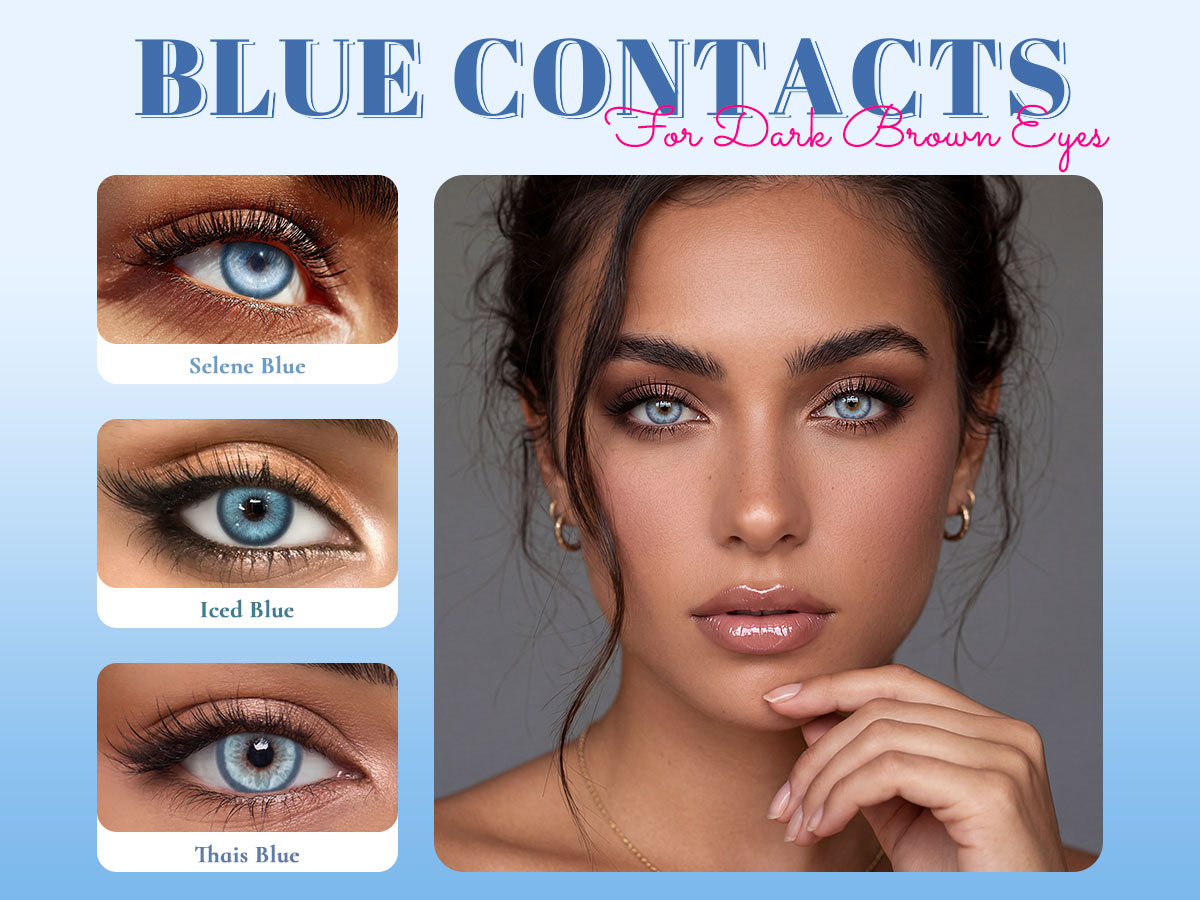
Quick answer: Blue contacts can create a visible change on dark brown eyes, but the result depends on the exact printed design and your starting iris. A blue name, grey-blue label or opacity claim alone does not guarantee coverage or a natural-looking result. Compare relevant on-eye photos before choosing.
Will the Blue Show Enough for You?
Decide whether you want a small cool-toned change or clearly blue eyes. More visible color is not automatically a better result; it depends on your preference. Look for the same design on an iris close to your own depth. If that example is missing, treat the final color as uncertain.
| Question | What to inspect |
|---|---|
| Will it show on my starting iris? | Compare a photographed deep brown starting eye with the lens result, where available. |
| Will it look too bright? | Judge the whole face in indoor and daylight examples, not just a bright close-up. |
| Will the original brown remain visible? | Inspect the transition near the pupil and decide whether you like the mix. |
| Will the outline look too strong? | Compare the printed outer ring at normal viewing size. |
Three Blue Product Pages to Compare
Open two candidates and compare current photos, outer-ring contrast and the pupil-area transition. These are visual comparison starting points, not verified same-wearer dark-eye trials or prescription recommendations. Published photos can differ in model, original eye color, lighting, makeup and crop, and may be edited. They cannot establish fit or comfort.
Browse the Blue Colored Contacts collection for more designs or Soft Blue Grey for another comparison direction. For a smaller departure from deep brown eyes, compare the natural dark-brown-eye collection instead of assuming blue is the only option.
If Blue Looks Too Obvious
Compare the specific cause: color contrast, a strong outline or an abrupt pupil transition. A muted name does not guarantee a softer result. Use the blue design comparison guide for a closer inspection, or compare grey designs and the hazel guide.
From Blue Shortlist to Cart
- Confirm a current contact-lens prescription and professional fitting for the exact lens. In the United States, this includes zero-power cosmetic contacts.
- Check current Power for each eye, product specifications, replacement label and pack configuration. Two lenses means two individual lenses, not two pairs.
- Do not change base curve, diameter or prescribed brand to increase color coverage. Use the daily vs yearly guide to compare care routines.
- Read customer reviews and prescription verification, then check the selected product, Power and quantity in the cart.
Follow the exact fitted product instructions and professional wearing guidance. Appearance is a separate comparison from clinical fit and comfort.
FAQs
Are grey-blue contacts always the most natural on dark eyes?
No. Compare the exact design and result on a similar starting iris. Color-family names alone do not predict naturalness.
Does a bigger diameter make blue show better?
Overall diameter is not a measure of printed-color coverage. See the lens vs graphic diameter guide.
Where should a first-time buyer start?
Choose the amount of change you want, compare two appropriate products and follow the first-pair checklist.