
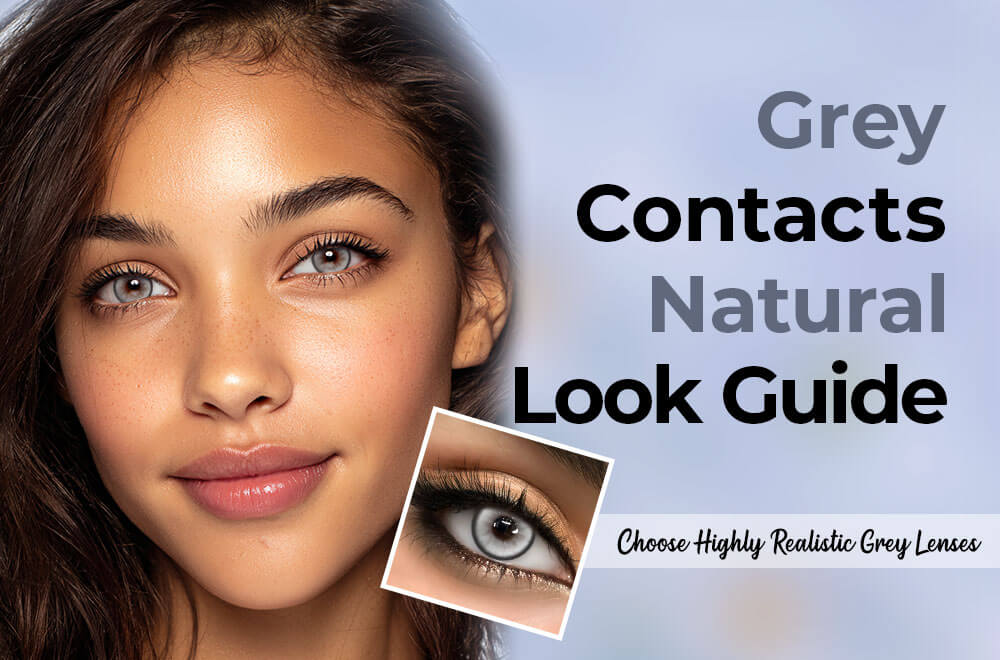
Grey contacts can look incredibly elegant — or obviously fake.
The difference usually comes down to tone, pattern, and how the lens blends with your natural eye color.
If you want a natural result, the best grey contacts are not bright silver or flat ash tones. They are usually soft, layered, slightly muted, and designed to add depth instead of just changing color.
This guide explains what makes grey contacts look natural, who they suit best, and how to choose the right style without ending up with a harsh or costume-like effect.
Quick Answer: What Makes Grey Contacts Look Natural?
Natural-looking grey contacts usually have:
- soft, blended edges
- multi-tone pigment instead of one flat grey
- low to medium saturation
- a realistic iris pattern
- a shade that works with your skin tone and natural eye color
If a grey lens looks too icy, too bright, or too sharply outlined, it usually stops looking natural.
Why Grey Contacts Can Look So Good
Grey is one of the most versatile contact lens colors because it can do two things at once:
- brighten the eyes
- stay softer than blue or green
That’s why many people choose grey when they want a noticeable color shift without looking too dramatic.
A well-designed grey lens can make eyes look:
- cleaner
- brighter
- more defined
- more “camera-friendly” in daylight
For many wearers, grey feels like the easiest way to get a polished, elevated look without stepping too far away from natural beauty.
Who Looks Best in Natural Grey Contacts?
Dark Brown Eyes
Grey can work beautifully on dark eyes — but only if the lens has enough opacity and proper layering.
Muted grey tones usually look more believable than icy or silver-heavy shades.
Medium Brown or Hazel Eyes
This is one of the easiest eye colors for grey contacts.
The lens can brighten the iris while still keeping some warmth underneath, which makes the result look softer and more realistic.
Light Eyes
Grey contacts on light eyes often create a refined, cool-toned look.
The key is avoiding overly bright lenses that make the eye look flat.
What Kind of Grey Looks Most Natural?
Not all grey contacts look the same.
Some are more blue-based, some more smoky, and some have a warm taupe undertone.
The most natural-looking grey contacts are usually:
- smoky grey
- sepia grey
- taupe grey
- soft mist grey
- charcoal grey with layered pigment
The least natural-looking grey contacts are often:
- bright silver
- blue-white grey
- high-contrast flat grey
- heavily outlined grey lenses
If your goal is a natural everyday result, softer greys almost always work better than dramatic cool-toned ones.
5 Signs a Grey Contact Lens Will Look Natural
1. The grey is slightly muted
Natural grey is rarely bright silver.
A little softness makes the lens easier to wear in real life.
2. The lens has more than one tone
A realistic iris is not one flat color.
Grey lenses with layered pigment usually look much better up close.
3. The outer ring is soft, not harsh
A thick limbal ring can make grey contacts look doll-like instead of natural.
4. The center blends smoothly
Grey lenses should not stop too sharply around the pupil area.
Smooth blending creates a more believable transition.
5. The lens looks better in daylight than in studio photos
That’s often the best test.
If it still looks soft outdoors, it’s probably a good grey.
Grey Contacts Natural Look: Best Use Cases
Natural grey contacts work especially well for:
- everyday makeup looks
- work or school styling
- soft glam beauty looks
- photos and selfies in natural light
- first-time wearers who want a visible but wearable color
Grey is also a smart option if you like cool tones but find blue contacts too artificial.
How GleGlow Approaches Natural Grey Contacts
When people shop for natural grey contacts, they often realize that many grey lenses look too sharp, too blue, or too “costume-like.”
That’s why softer, layered grey designs tend to stand out more.
In collections like GleGlow Selene Grey or Smoky Veil Grey, the grey tone is usually less aggressive and more wearable. Instead of trying to create a loud silver effect, these styles focus more on:
- soft color transition
- natural iris depth
- everyday-friendly brightness
That kind of design tends to work better for people who want compliments on their eyes — not questions about their lenses.
How to Choose the Right Grey Contacts for Your Look
Choose soft grey if:
- you want an everyday natural look
- you have dark brown eyes
- you prefer subtle makeup
Choose cooler grey if:
- you want stronger contrast
- your makeup style is cleaner or more editorial
- your natural eye color is already lighter
Choose sepia or taupe grey if:
- you want the most realistic finish
- you prefer warmth over icy tones
- you want the grey to feel softer on the face
Common Mistakes When Buying Grey Contacts
People usually regret grey contacts when they choose:
- a lens that is too bright for their natural eye color
- a flat grey with no pattern depth
- a style with an overly dark ring
- a grey that turns blue-white in photos
If you want grey contacts that look natural, it’s usually better to go slightly softer than you think you need.
FAQ: Grey Contacts Natural Look Guide
Do grey contacts look natural on brown eyes?
Yes, especially if the lens uses layered pigment and a soft grey tone. Muted greys usually look more natural than icy silver shades on brown eyes.
What shade of grey contacts looks most natural?
Smoky grey, sepia grey, and taupe grey usually look the most natural because they have softer tones and blend better with real eye color.
Are grey contacts more natural than blue contacts?
For many people, yes. Grey contacts often look softer and less artificial than blue contacts, especially in daylight.
Can beginners wear grey contacts?
Yes. Grey is often a good beginner-friendly color because it gives a visible change without being too dramatic.
Do grey contacts suit warm skin tones?
Yes, especially taupe grey or slightly warm-toned grey lenses. They usually blend better than bright silver on warmer complexions.
Final Thoughts
If you want a lens color that feels elegant, modern, and wearable, grey is one of the easiest shades to get right — as long as the design is soft enough.
The best natural grey contacts don’t try to look icy or extreme.
They add brightness, definition, and a little cool-toned depth while still letting your eyes look like real eyes.
That’s what makes a grey lens feel natural — not the color alone, but the way it’s built.