
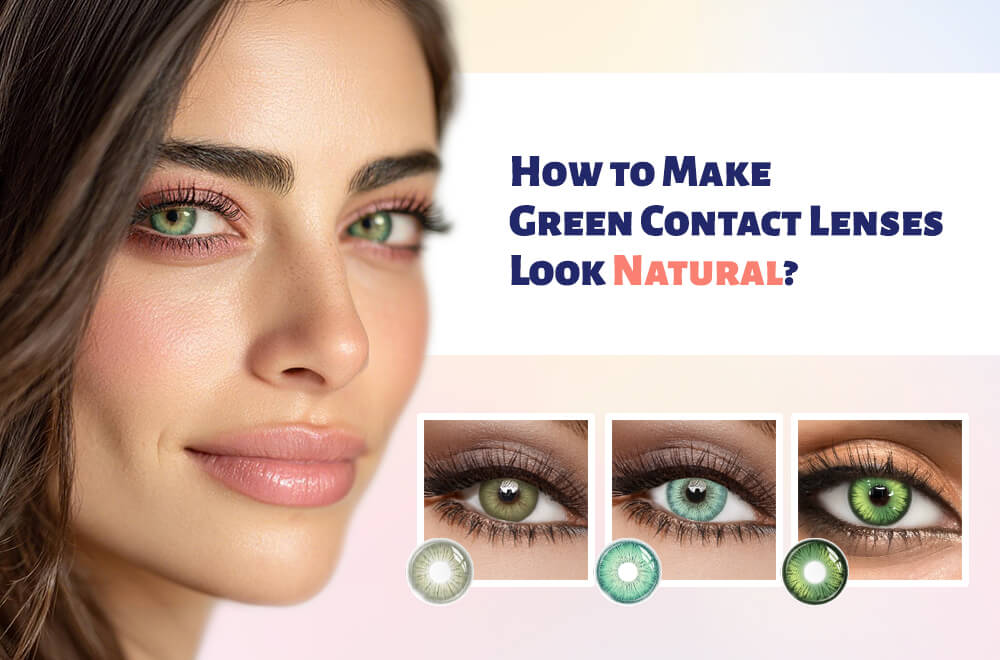
Green contact lenses are alluring — they offer a hint of mystery, freshness, or a touch of fantasy. But for many people, green lenses end up looking unnatural or “fake.” If you’ve ever tried green contacts and felt they didn’t quite suit you, the problem often lies not in you — but in the lens design, fit, or styling. Here’s how to avoid the common pitfalls and choose green contacts that look beautifully natural, even on dark eyes.
1. What Makes Green Contacts Look Unrealistic
• Low Pigment Saturation or Poor Tint Density
When a green contact lens has weak pigmentation or a thin tint layer, it cannot fully mask a naturally dark iris. The result? You see more of your original eye color than the green — the lens appears dull, washed-out, or like a light filter rather than real green eyes.
• Flat, Uniform Color Without Natural Variation
Natural irises are rarely a single flat color — they feature subtle gradients, flecks, and radial patterns. Lenses that rely on a uniform green shade (without flecks, shading, or depth) often look overly artificial — like a painted overlay rather than a real iris.
• Sharp, Hard Edges Around the Iris (Heavy Limbal Rings)
A thick, dark outer ring (limbal ring) can draw unwanted attention and make it obvious you're wearing contacts. While some limbal definition is natural, a too-bold ring often leads to a “circle-lens” or “sticker-on-the-eye” effect.
• Poor Fit — Wrong Base Curve or Diameter
Even high-quality colored lenses will look fake if they don’t fit your eye properly. A mismatch in base curve or diameter can cause the lens to decenter or rotate — making the pattern shift awkwardly or misalign with your pupil. That distortion often makes the color appear unnatural or causes visible color ring artifacts.
• Incompatible Lighting or Makeup Choices
Lighting dramatically impacts how contacts look. Neon-bright lenses may look fine under a spotlight, but harsh in daylight or soft light. Similarly, aggressive makeup (very dark liner, heavy eye shadow) can clash with bright green lenses, making them stand out unnaturally instead of blending in.
2. How to Choose Green Contacts That Look Real on Dark Eyes
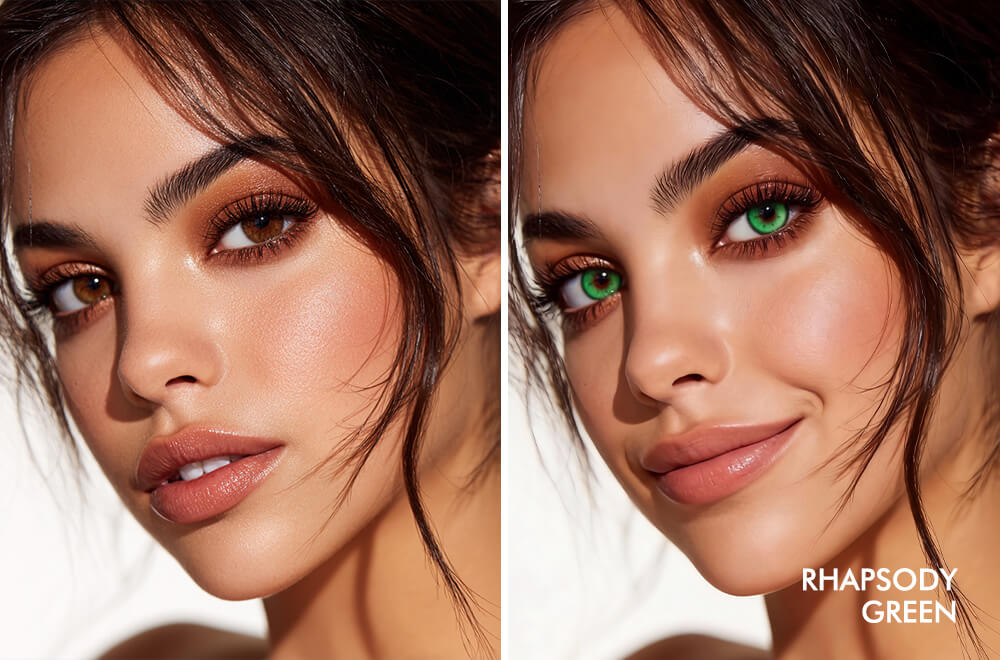
✅ Go for High Pigment / Multi-layered Tint Lenses
If you have dark brown or deeply pigmented eyes, choose green lenses known for opaque tinting and multi-layer colour embedding. These are more likely to cover your original iris color and produce a visible green shade.
✅ Look for Natural Iris Patterns: Gradients, Flecks, or 2-3 Tone Greens
Realistic green lenses often mimic the complexity of human irises: subtle gradients from the outer rim toward the pupil, delicate color flecks (gold, olive, jade), and uneven shading. These natural details help the lens blend with your eye rather than stand out as “an overlay.”
✅ Choose Subtle or Soft Limbal Rings
Go for lenses with a thin or softly blended limbal ring — not a thick, jet-black circle. This helps the colored iris look part of your eye, not like a sticker placed on top.
✅ Ensure a Proper Fit (Base Curve & Diameter)
Measure your eye’s base curve and diameter — or get a professional fitting — to make sure the lens sits centered and flat. A good fit ensures the color stays aligned and the lens pattern doesn’t shift or blur.
✅ Test Under Different Lighting & Use Complementary Makeup
Try your lenses in daylight, indoor light, and soft evening light. Pair green contacts with earthy or neutral makeup (browns, soft golds, taupes) rather than harsh, contrasting shades. Warm makeup tones help green eyes look harmonious and believable.
3. Why GleGlow’s Green Lenses Are Especially Suitable
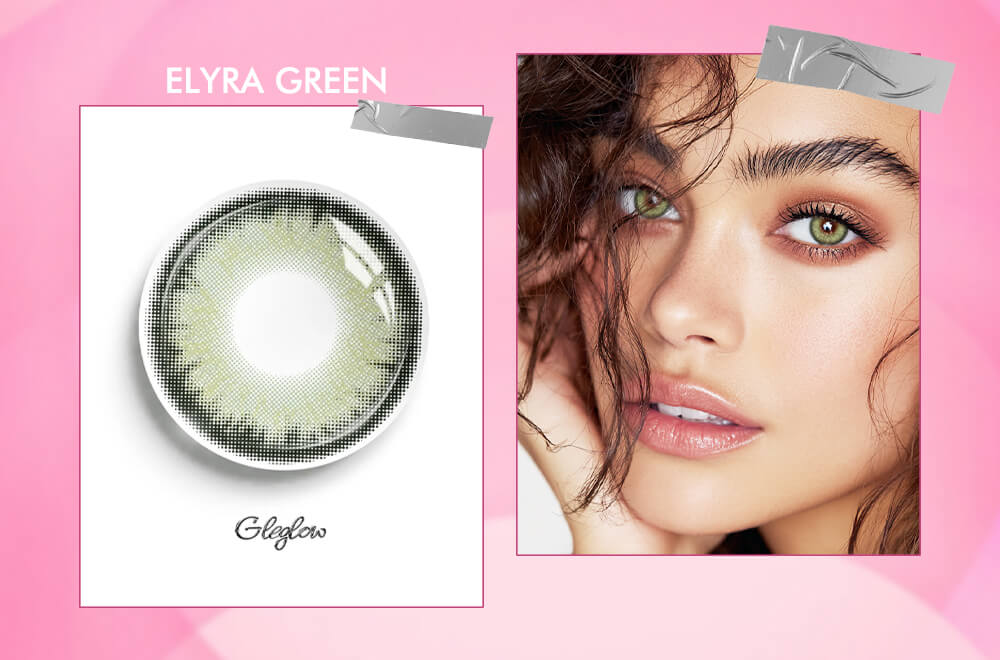
GleGlow offers green contacts designed with realistic colour techniques and comfort in mind — built to address exactly the challenges above:
-
Multi-Layer Pigmentation & Natural Patterns — Many GleGlow green lenses use layered tints and flecked patterns, giving iris-like depth and texture rather than a flat, artificial tone.
-
High-Quality Materials for Comfort & Clarity — Their lenses stay stable on the eye, with good oxygen permeability and a comfortable fit, reducing the risk of lens shift or color distortion.
-
Prescription & Proper Fit Options — GleGlow supports prescription lenses and properly measured base-curve/diameter parameters, ensuring lenses sit correctly on different eye shapes.
-
Versatile Styles for Daily Wear or Bold Looks — Whether you want a subtle everyday green or a more vivid shift for cosplay or nights out, GleGlow offers options to match different preferences.
4. Best Practices to Wear Green Lenses Naturally
-
Keep eyes hydrated — Use re-wetting drops if dryness occurs. Dryness can make colors look patchy or uneven.
-
Clean & store lenses properly — Use only sterile contact-lens solution, store in a clean case, and follow dormancy cycles. Improper care can degrade pigmentation or cause lens warping.
-
Start with short wear times — Especially when you’re new, begin with 2–3 hours to ensure comfort and observe how the color sits under different lighting.
-
Use subtle makeup tones — Try earth tones, soft golds, warm browns — they tend to complement green lenses gracefully. Avoid heavy eyeliner or overly contrasting colors that draw attention to the lens border.
-
Check your look in multiple settings — What looks good indoors may look different in daylight or under flash photography.
🔚 Conclusion
Green colored contacts don’t have to look fake or out of place. The difference usually comes from lens quality, pigmentation, fit, and styling — not your eyes. By choosing opaque, multi-tone green lenses with natural iris patterns, ensuring proper fit, and pairing them with suitable lighting and makeup, you can achieve a believable, striking green eye color that feels like your own. With carefully crafted options from GleGlow, getting green eyes that look real has never been easier. Get your green contact lenses today!