
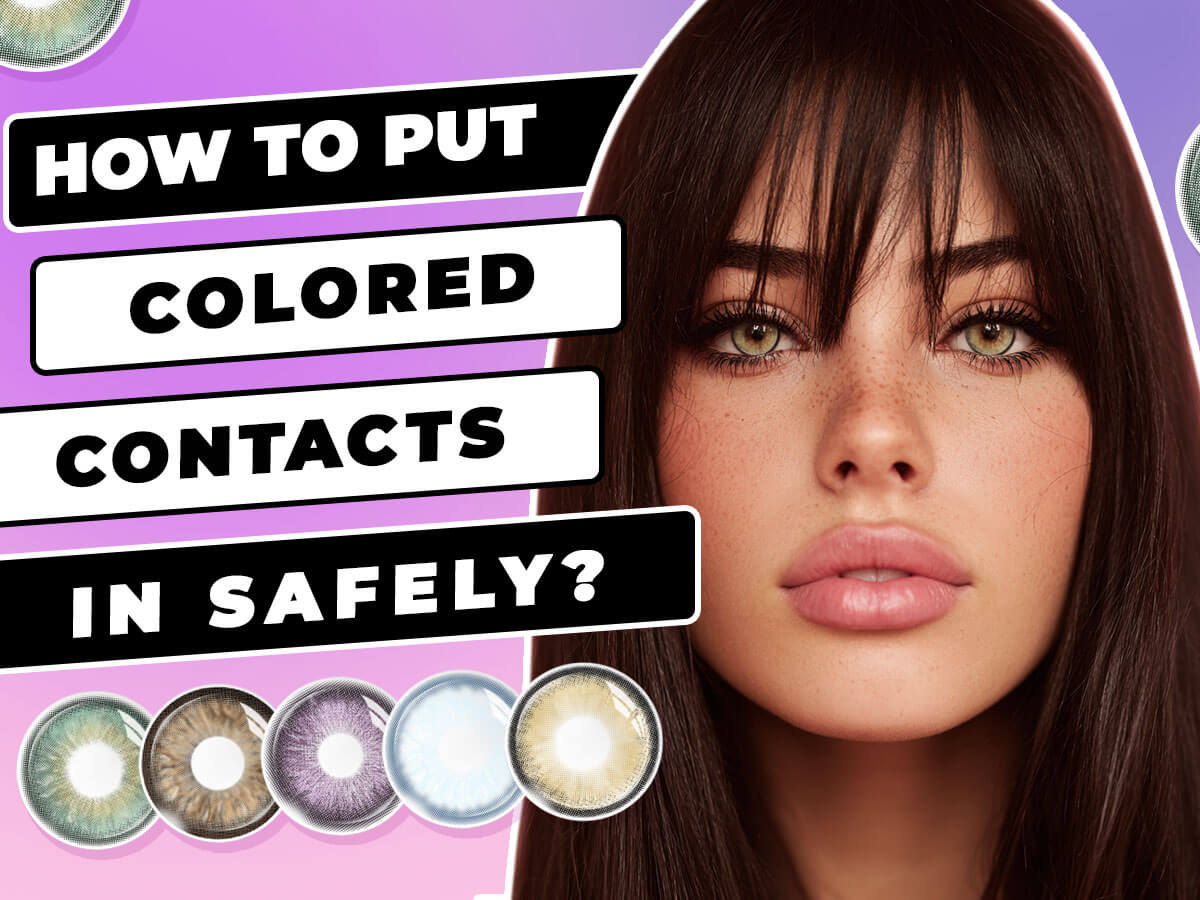
Colored contacts can improve your look when you want to switch things up for a special event, cosplay, or everyday wear. You need to become skilled at putting in colored contacts properly to protect your eyes and get that perfect look you're after.
Colored contacts are medical devices. In the United States, even zero-power (plano) decorative lenses require a valid prescription and professional fitting. Review our prescription verification information before ordering. This guide supports, rather than replaces, hands-on insertion and removal training from your eye care professional.
Let us walk you through the safe way to put in colored contacts. We'll cover everything from washing your hands with soap and lukewarm water to checking your lenses for damage. These instructions will help you change your eye color safely, whether you're new to colored contacts or just want to get better at putting them in.
Get Ready to Use Colored Contacts
You need to prepare the right way before putting in colored contacts to protect your eyes. Let's look at the steps that will give a safe and comfortable experience.
Wash and dry your hands properly
Wash your hands thoroughly with soap and water, then dry them completely with a clean, lint-free cloth before touching a lens. Avoid leaving soap, lotion, or water on your fingers.
Inspect the lens for damage or debris
Clean hands mean you're ready to check each lens. Put it on your fingertip (not your nail) and look for tears, damage, or debris. The lens should also face the right way - a perfect bowl shape appears with edges that turn slightly upward. Do not rely on discomfort alone to identify an inside-out lens; use the lens instructions and the technique your eye care professional showed you.
Check your prescription and lens instructions
Use the specific lenses prescribed and fitted for you, from a seller that requires and verifies your prescription. A regulatory statement does not establish that a lens fits your eyes.
Prepare lenses according to their care system
Check whether your lenses are daily disposables or reusable, and follow their first-use directions. There is no universal four-, six-, or eight-hour preparation rule for every lens. Never shorten a required disinfection cycle.
For reusable lenses, use the compatible care system recommended by your eye care professional and complete every labeled step. Multipurpose solution and hydrogen peroxide systems have different instructions. Peroxide requires the supplied special case and full neutralization; never put unneutralized peroxide in your eyes or use it as a pre-insertion rinse. See the FDA peroxide guidance.
How to Put Colored Contacts in for the First Time
Your lenses are ready, so let's talk about putting in your colored contacts. The process might seem tricky at the time you first try it, but it becomes natural with practice.
Place the lens on your fingertip
Put the contact lens on your dominant hand's index fingertip. Dry your hands completely first. Keep the lens hydrated as directed; do not add water or saliva.
Check if the lens is inside out
Look at the lens to make sure it's facing the right way. A properly positioned lens looks like a perfect bowl with edges that turn slightly upward. The lens is inside out if its edges flare out like a rimmed bowl or taco shell. Some lenses have laser markings or numbers that read backward if they're inside out - this gives you another way to check.
Hold your eyelids open correctly
Your non-dominant hand should hold your upper eyelid against your brow bone. The middle finger of your dominant hand (holding the lens) needs to pull down your lower eyelid. This creates enough space to insert the lens and stops you from blinking.
Look in the right direction while inserting
Keep your eyes fixed straight ahead into the mirror or slightly up toward the ceiling. Use the gaze direction and insertion technique demonstrated by your eye care professional.
Gently place the lens on your eye
Move toward your eye with steady confidence. Gently place the lens using the technique you were taught. Do not press on your eye or force insertion. Quick or jerky movements trigger blinking, so try to avoid them.
Blink to center the lens
Let go of your eyelids slowly and blink a few times after placement. These natural blinks help the lens move into position. Check that vision is clear and the lens feels comfortable. Persistent blur, irritation, or an off-center lens needs attention rather than repeated manipulation.
Adjusting and Removing Your Lenses Safely
Your colored contacts might need adjusting or removal at day's end, even with perfect insertion. Learning these techniques will keep your eyes healthy and comfortable while wearing them.
What to do about discomfort or an off-center lens
Do not rub or massage your eye to push a lens into position. If a lens is uncomfortable, repeatedly moves off-center, or leaves vision blurry, remove it and contact your eye care professional. Do not use a movement measurement to diagnose the fit yourself.
Stop wearing lenses and seek prompt eye care for pain, redness, light sensitivity, discharge, or changes in vision. Do not keep reinserting the lens to see whether symptoms settle.
Steps to remove the lens without irritation
Here's how to safely remove your lenses:
-
Wash and really dry your hands
-
Stand or sit before a well-lit mirror
-
Look upward and slightly tilt your head back
-
With your non-dominant hand, pull your upper eyelid up
-
Using your dominant hand's middle finger, pull down your lower eyelid
-
Gently slide the lens to the white part of your eye
-
Gently lift the lens out with the pads of your thumb and index finger, keeping your nails away from your eye
What to do if the lens won't come out easily
Do not force removal or dig at your eye with fingernails or tools. If your eye care professional has advised rewetting drops, use only drops labeled as compatible with your lenses and follow their directions. Never use water, saliva, or disinfecting solution as eye drops. If you cannot remove a lens, contact an eye care professional promptly; seek urgent care if you also have pain or vision changes.
Aftercare and Common Mistakes to Avoid
Daily disposables: discard after removal
Daily disposable lenses are single-use. Discard them after removal; do not clean, store, or reuse them.
Reusable lenses: follow the complete care routine
Clean, disinfect, and store reusable lenses according to the lens and care-system instructions each time. Use fresh solution and never top off old solution. With a multipurpose system, follow its rubbing, rinsing, and soaking directions. A peroxide system needs its own supplied case and full neutralization cycle.
Follow the care-system directions for the case as well. For standard lens cases, CDC recommends rubbing and rinsing with solution, then air-drying upside down with caps off and replacing at least every three months. Peroxide cases must be replaced as directed with each new bottle. See CDC contact lens care guidance.
Keep lenses away from water and saliva
Do not use water or saliva to rinse or store lenses. Remove lenses before showering or swimming.
Follow wearing and replacement instructions
Daily wearing time and replacement frequency are different instructions. Follow the schedule for your specific lens and your eye care professional’s advice, including when to replace a lens after opening. Occasional wear does not automatically extend that period. Avoid sleeping in lenses unless specifically directed by your eye care professional.
Your Next Steps
Before your first attempt, arrange professional insertion and removal training, confirm your prescribed lens, and read its instructions. Keep backup glasses available and stop if your eyes become uncomfortable.
Use our Wear & Care guide for your routine, or compare daily versus monthly colored contacts to understand the care commitments before choosing a prescribed product.