
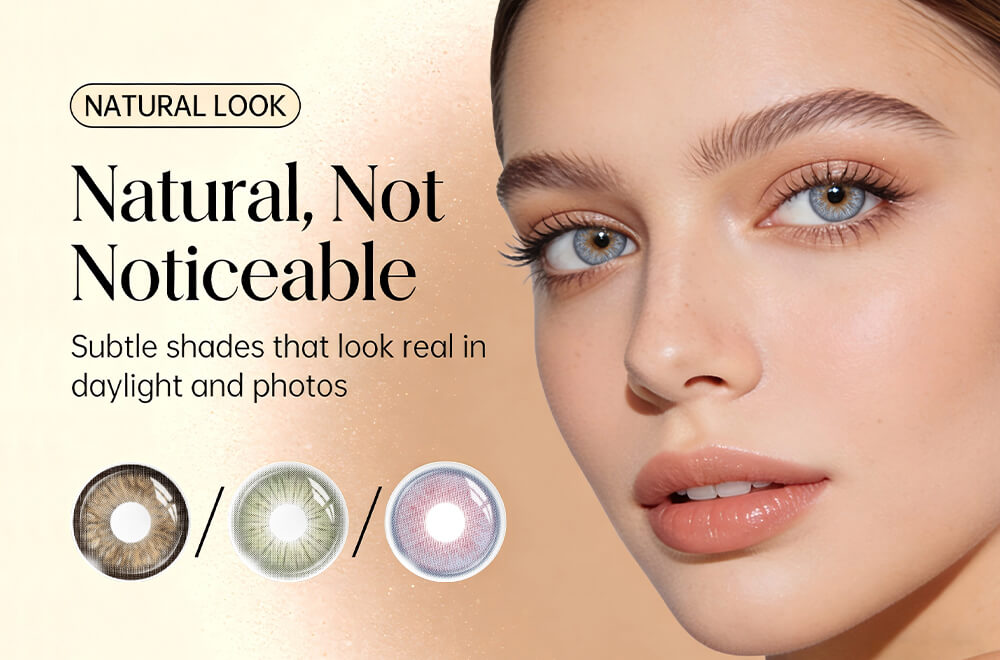
Some colored contacts “look fake” for the same reasons makeup can look harsh: wrong tone, hard edges, or flat color. The good news is that a natural result is mostly about choosing the right lens design—not just the shade name.
This hub is for people who want that “no-one-can-tell” effect: a gentle upgrade that still looks like you.
What usually makes lenses look more natural
-
Layered color (not one flat tone)
-
Soft edge blending (no harsh ring)
-
Low-saturation shades (especially for light blues/greens)
-
Depth over brightness (real eyes are never neon)
If blue or green keeps looking “off”
Start with these two guides—most “fake” results come from the same few design issues:
-
Why Blue Contacts Look Fake (and how to fix it)
-
Why Green Contacts Look Fake (and how to fix it)
A soft way to try the look
If you’re browsing for daily-friendly tones, look for soft grays, warm browns, muted blues, and gentle greens—these usually blend best with natural makeup and everyday lighting.