
Blue eyes give colored contacts a naturally light base, but the final effect still depends on your iris pattern, the lens design, lighting, and makeup. Grey, green, hazel, violet, and deeper blue directions can each create a different mood—from subtle definition to an obvious color shift. Choose the effect you want first, then use lenses prescribed and professionally fitted for your eyes.
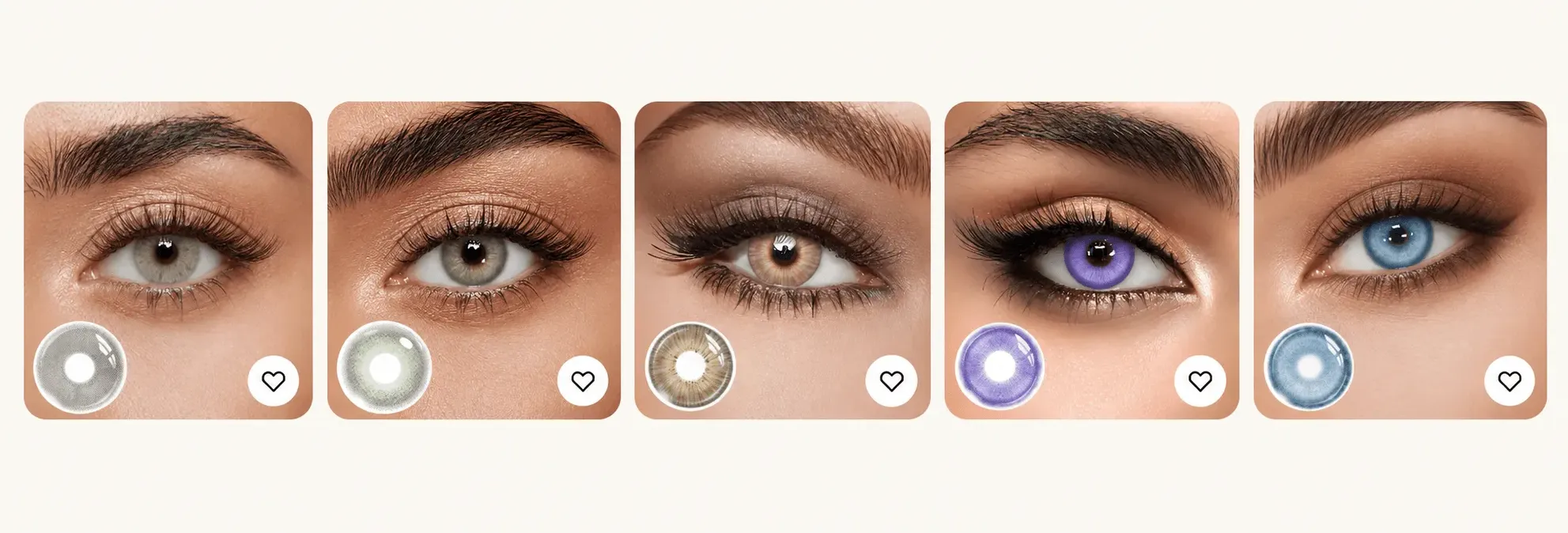
What colors can look good on blue eyes?
| Color direction | Typical visual mood | Styling approach |
|---|---|---|
| Grey | Cool, softened, or more defined | Pair with silver, taupe, charcoal, or a clean liner shape. |
| Green | Fresh contrast or a visible color shift | Use warm neutrals, bronze, or muted green details to keep the look balanced. |
| Hazel | Warmer and more natural-looking | Use brown, peach, copper, or gold tones around the eye. |
| Violet | Creative, cool-toned, or editorial | Keep the rest of the face simple so the eye color remains intentional. |
| Blue-toned | Brighter, cooler, or more stylized blue | Use contrast in lashes or liner rather than adding another strong color. |
Natural-looking colored contacts for blue eyes
If you want a subtle change, begin with an effect that is close to your natural brightness rather than a dramatic jump. Soft grey can emphasize a cool look, while hazel can introduce warmth. A low-contrast makeup palette and a tested photo can help you decide whether the change looks like the finish you want in real event lighting.
Bold color ideas for blue eyes
Green and violet can create a more obvious character-led result, while a deeper blue direction can make the eye color feel more graphic. For a bold look, choose one color story and repeat it in one small makeup or clothing detail. That keeps the lens color from competing with the rest of the styling.
How to choose without guessing
Think about contrast, not only the color name
The same named shade can read differently on different eyes. Consider whether you want a gentle shift, a defined limbal effect, a warm change, or a noticeable contrast. Use product images as inspiration, not as a guarantee of an identical result on every wearer.
Check your event lighting
Daylight, indoor light, flash, and close-up video each affect how color and contrast read. Once your lenses have been professionally fitted, test the complete look in the light that matters for your plans.
Explore a dedicated color category
GleGlow's Blue collection provides a color-led starting point for comparing current styles. Check individual product details, availability, and prescription options before making a choice.
Safe wear comes first
Safety note: Decorative and colored contact lenses require a valid prescription and professional fitting in the United States. Follow your eye-care professional's instructions, do not share lenses, and seek prompt care for pain, redness, discharge, or vision changes. See the FDA's guidance on decorative lenses for more information.
FAQ
What colored contacts look most natural on blue eyes?
Grey and hazel directions are often useful starting points when you want a softer change, but the final effect depends on the lens design, your natural iris, and lighting.
Can green contacts look noticeable on blue eyes?
They can create a visible contrast, especially when the color story is supported by simple makeup and appropriate lighting. Results vary by lens design and wearer.
Do colored contacts need a prescription if I have blue eyes?
Yes. Decorative and colored lenses require a valid prescription and professional fitting in the United States.