
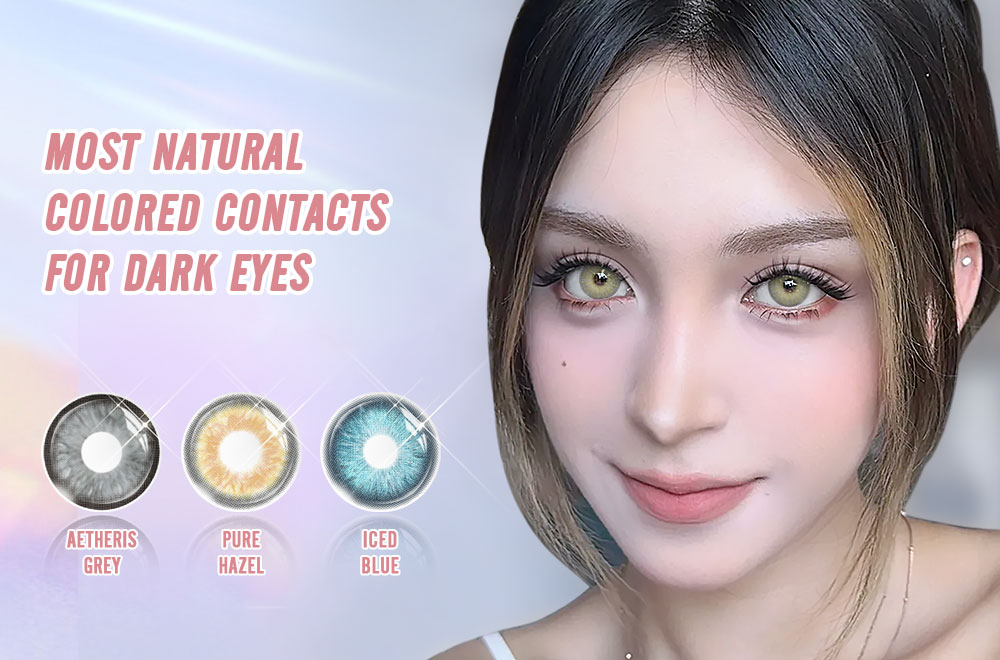
Dark brown eyes naturally have rich depth and strong pigment, which is exactly why choosing colored contacts can feel difficult.
Some lenses barely show up. Others look too bright, too flat, or obviously fake in sunlight. The most natural colored contacts for dark eyes usually aren’t the boldest ones — they’re the lenses that blend softly with your natural iris instead of completely covering it.
This guide explains:
- which colors look most natural on dark eyes
- why some colored contacts look fake
- how to choose realistic styles
- and which lens designs work best for daily wear
Why Colored Contacts Look Different on Dark Eyes
Dark eyes already contain strong natural pigment, so the lens has to balance visibility and realism at the same time.
Natural-looking colored contacts usually include:
- layered pigment
- medium opacity
- soft edge blending
- realistic iris patterns
The goal is not to replace your eye color completely. It’s to add subtle brightness, depth, and dimension while still looking believable in daylight.
What Color Contacts Look Most Natural on Dark Eyes?
Some shades naturally blend better with brown eyes than others.
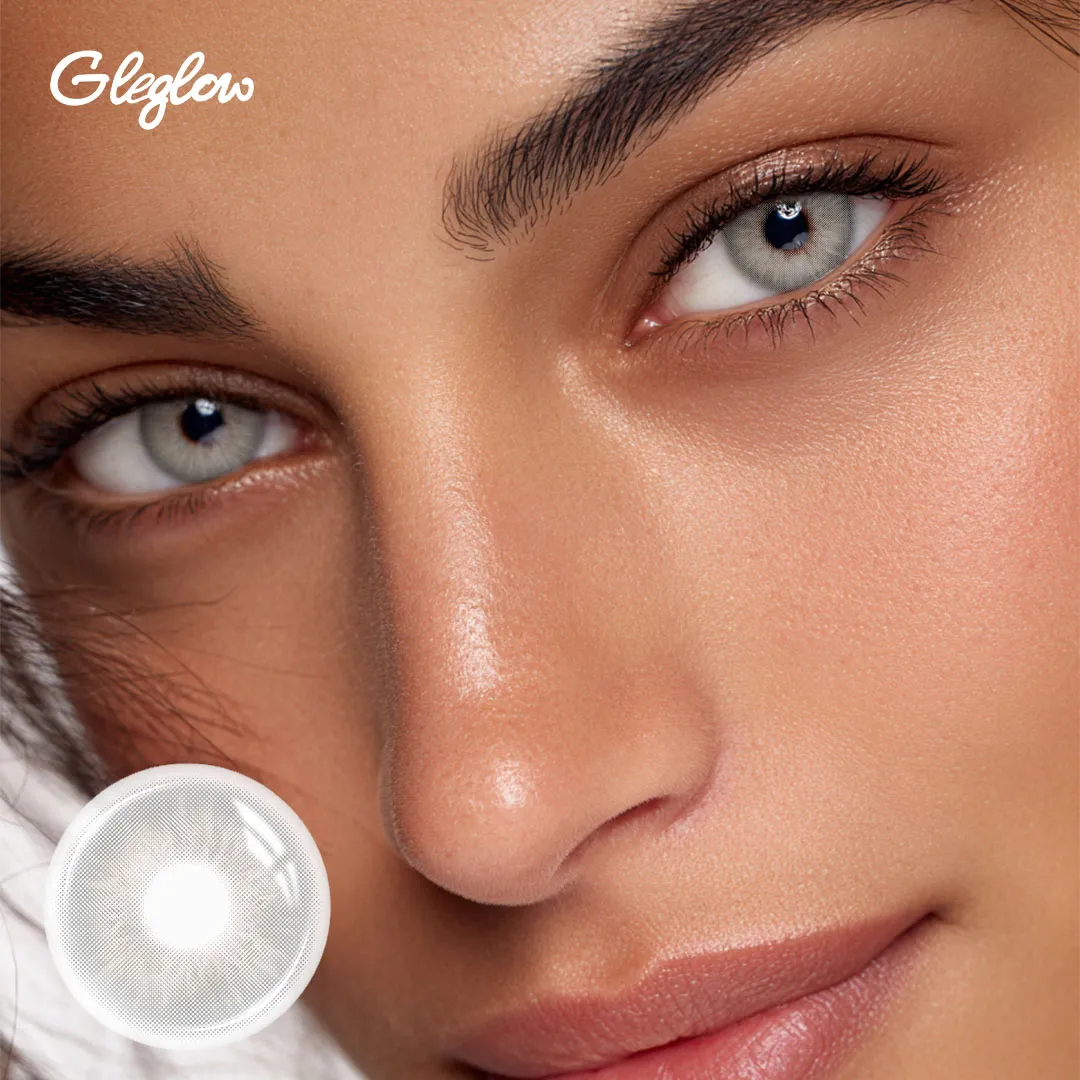
Grey Contacts
Grey is one of the safest and most wearable choices for dark eyes because it brightens the iris without creating harsh contrast.
Soft smoky grey or charcoal tones usually look much more natural than icy silver shades.
Natural grey styles similar to GleGlow Moeli Grey are designed to create this softer brightening effect while keeping the eyes realistic.
Hazel Contacts
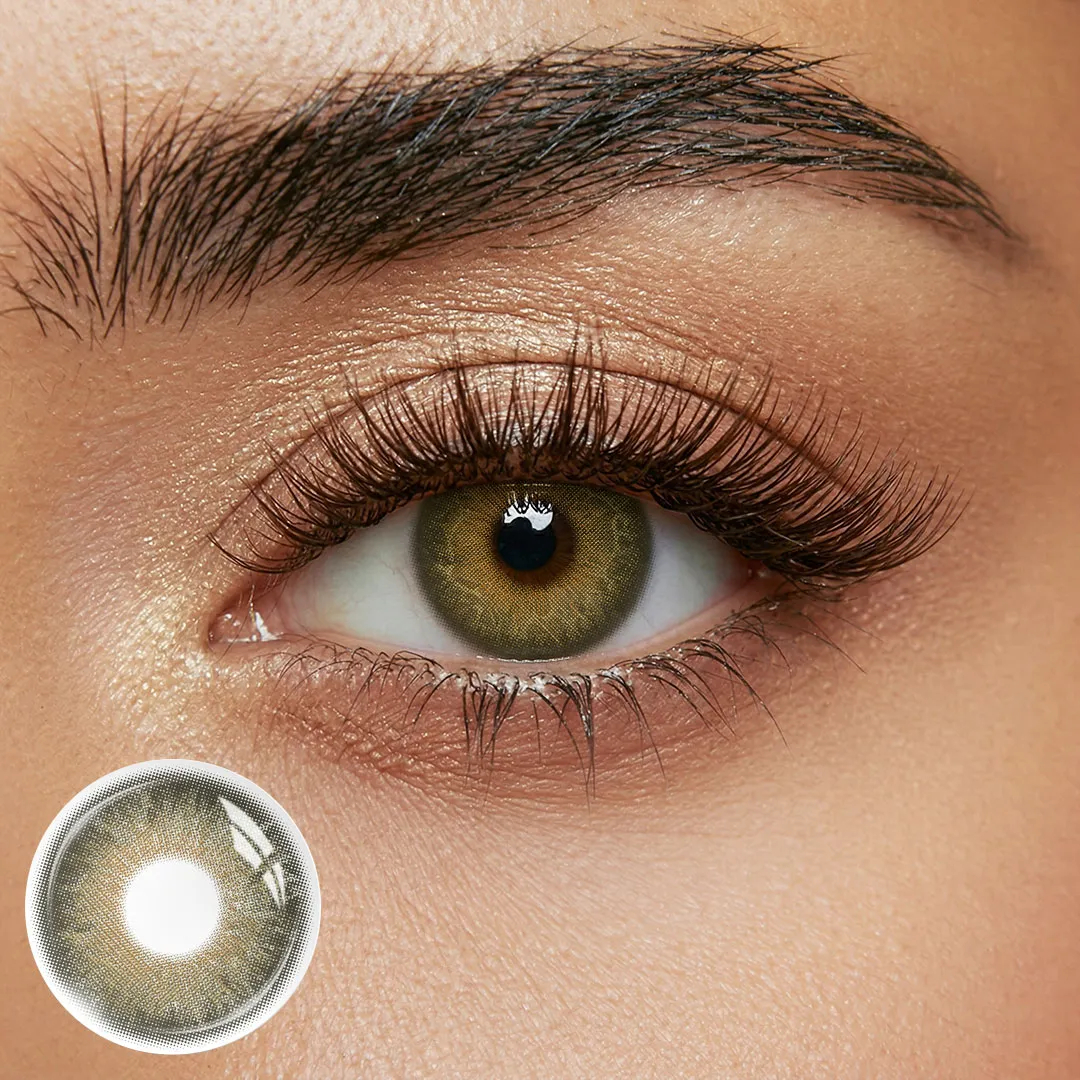
Hazel works especially well because it already contains warm brown undertones.
Instead of dramatically changing eye color, hazel contacts usually:
- add warmth
- create soft golden highlights
- make the iris look more dimensional
Hazel-brown blends like GleGlow Aroya Hazel are popular because they create visible change while still looking natural.
Brown Contacts
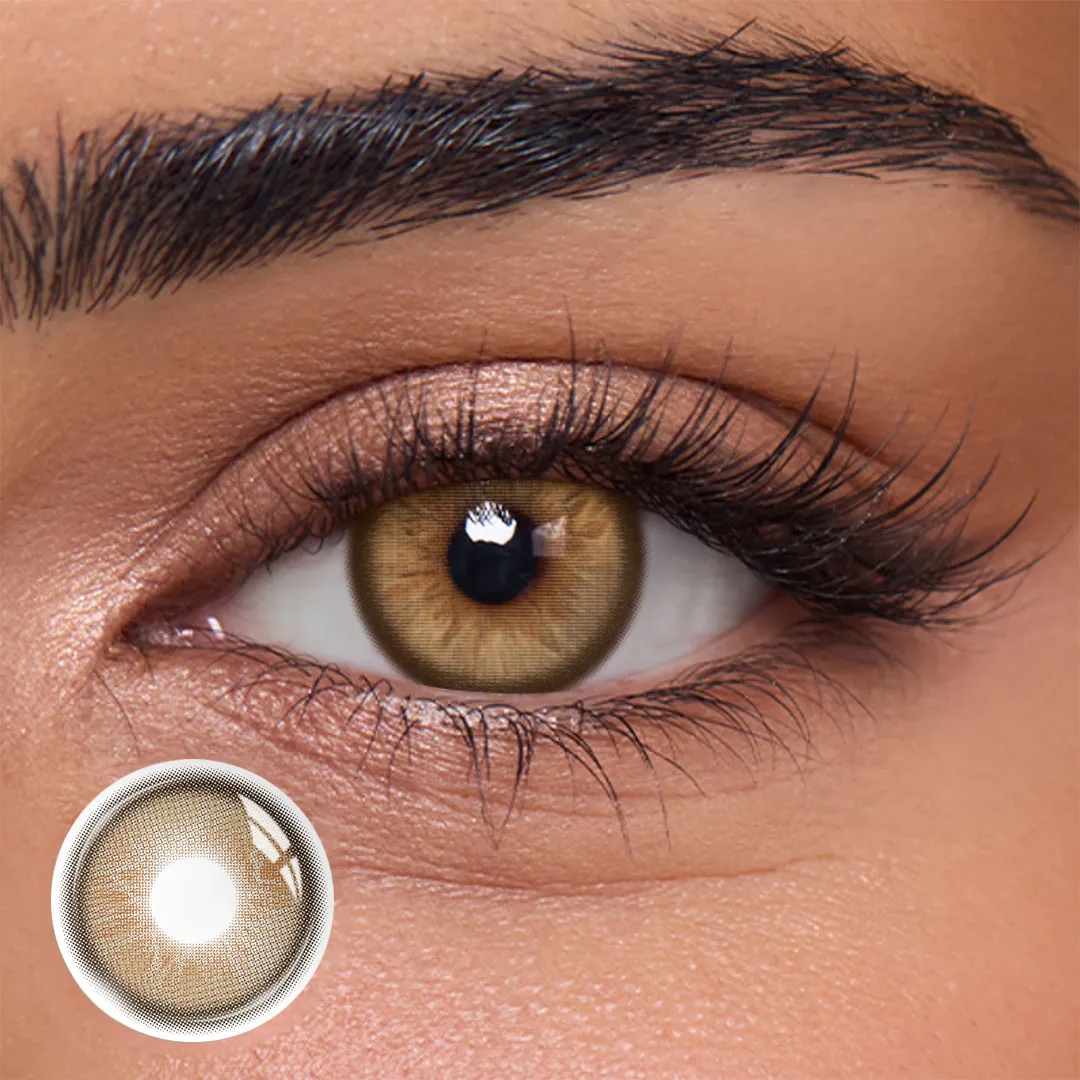
Brown contacts are ideal for people who want subtle enhancement rather than obvious transformation.
Warm brown lenses can:
- smooth uneven eye tones
- add depth
- make the eyes appear softer in natural light
Styles similar to GleGlow Verina Brown focus more on realistic layering than dramatic contrast.
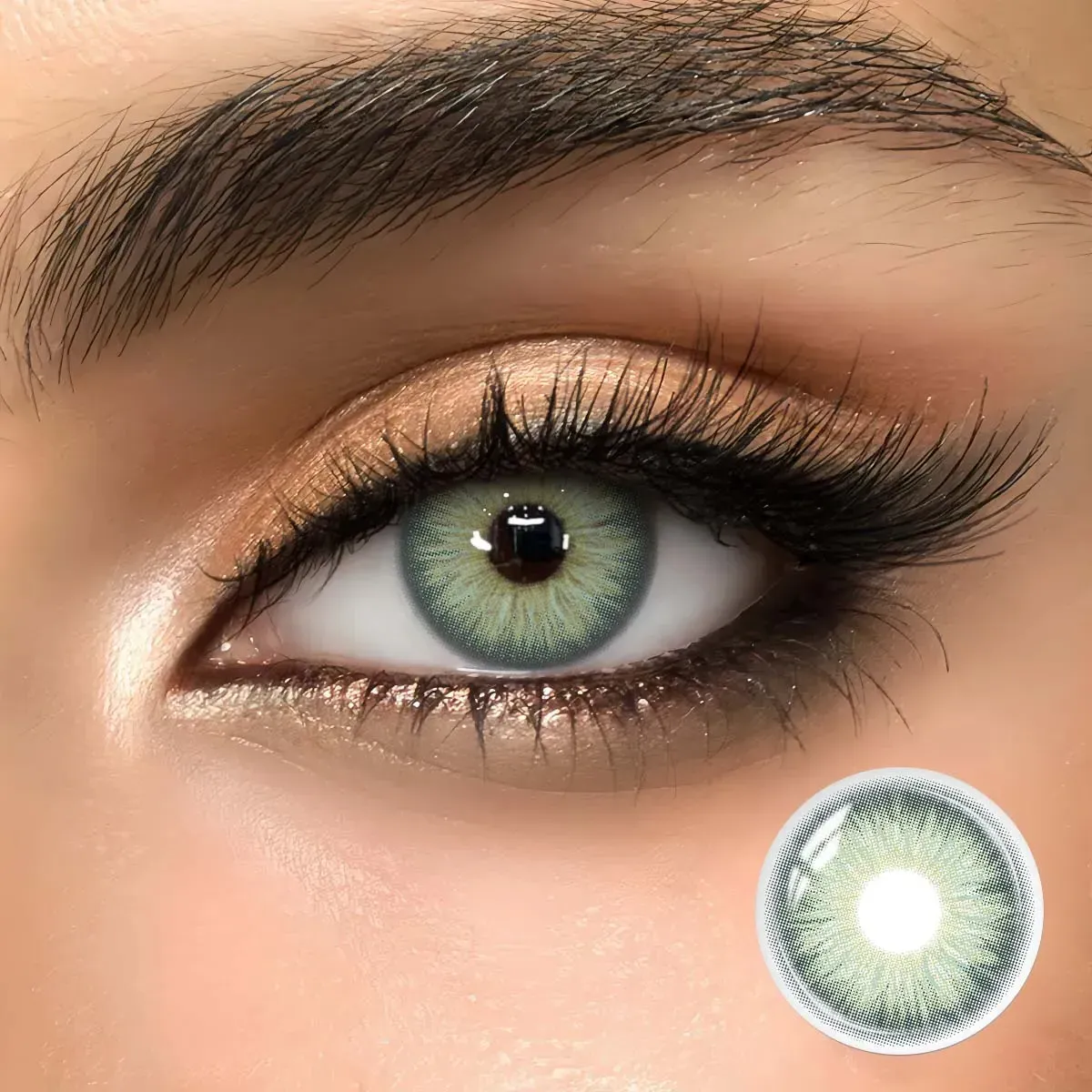
Muted Green Contacts
Green contacts can work beautifully on dark eyes — but only when the tone is muted.
Olive green, moss green, and brown-green blends usually look far more realistic than neon green lenses.
Natural green styles similar to GleGlow Evergreen Olive are designed to blend softly with dark eyes instead of overpowering them.
Why Some Colored Contacts Look Fake on Dark Eyes
Colored contacts often look artificial when they use:
- extremely bright pigment
- flat single-tone color
- thick black outer rings
- very high contrast
This becomes even more noticeable in sunlight.
Realistic colored contacts usually focus on:
- softer transitions
- layered color
- natural iris texture
- balanced saturation
The more blended the lens design feels, the more believable the result usually looks.
Best Colored Contacts for Everyday Wear
For daily wear, most people with dark brown eyes prefer:
- soft grey
- warm brown
- hazel
- muted olive green
These colors:
- work well in daylight
- pair naturally with makeup
- feel less dramatic in person
- create enhancement instead of costume-like transformation
That’s why many natural collections — including GleGlow’s everyday styles — focus heavily on soft neutral tones and layered designs.
How to Choose Natural Colored Contacts for Dark Eyes
1. Choose Medium Opacity
Low opacity may disappear completely on dark eyes.
Very high opacity can create a flat “printed lens” effect.
Medium opacity usually creates the most natural balance.
2. Avoid Extremely Bright Shades
Very bright blue or neon green lenses often create too much contrast on dark brown eyes.
Muted tones almost always look more realistic.
3. Look for Layered Iris Patterns
Real eyes contain multiple tones and textures.
Flat single-color lenses usually look less believable, especially in natural lighting.
4. Choose Soft Outer Rings
Harsh limbal rings can make lenses look obvious.
Soft edge blending helps the color merge naturally into the iris.
What Makes GleGlow Lenses Work Well for Dark Eyes?
Many natural-style GleGlow lenses are designed around:
- soft color layering
- wearable tones
- balanced opacity
- realistic iris texture
Instead of using extremely bright pigment, the goal is usually:
- subtle brightness
- soft enhancement
- natural depth
That’s why styles like:
- Moeli Grey
-
often work especially well for dark brown eyes.
Best Natural Contact Colors by Style Goal
Most Natural Overall
Brightening Effect
Soft Color Change
Noticeable but Wearable
Related Guides
- Best Natural Colored Contacts
- Most Realistic Colored Contacts
- Grey Contacts Natural Look Guide
- Brown Contacts Natural Effect
- Hazel Contacts Natural Style
- Colored Contacts That Look Real in Sunlight
FAQs: Most Natural Colored Contacts for Dark Eyes
What color contacts look most natural on dark eyes?
Grey, hazel, and warm brown contacts usually look the most natural on dark eyes because they blend more softly with natural brown pigment.
Do grey contacts look natural on dark brown eyes?
Yes. Soft smoky grey lenses often brighten dark eyes without creating harsh contrast, especially when the design uses layered pigment.
Which colored contacts look least fake?
Muted tones with soft edge blending usually look the most realistic. Grey, brown, and hazel are generally safer than bright blue or neon green.
Are hazel contacts good for beginners?
Yes. Hazel contacts create subtle warmth and dimension while still looking natural in daylight.
Why do some colored contacts look fake in sunlight?
Flat pigment, overly bright colors, and thick outer rings often become more visible in direct lighting.
What are the best natural contacts for everyday wear?
Soft brown, grey, and hazel contacts are the most popular for daily wear because they match natural makeup and lighting conditions.
Do natural colored contacts still show up on dark eyes?
Yes, especially lenses with medium opacity and layered color design.
What lens features matter most for dark eyes?
The most important features are:
- layered pigment
- balanced opacity
- realistic iris texture
- soft edge blending
These details help the lenses blend naturally instead of looking flat or artificial.
Final Thoughts
The most natural colored contacts for dark eyes usually aren’t the brightest lenses.
The best styles work with your natural eye color instead of trying to completely replace it.
Soft grey, warm brown, hazel, and muted green tones tend to create the most realistic results — especially when combined with layered pigment and natural blending.