
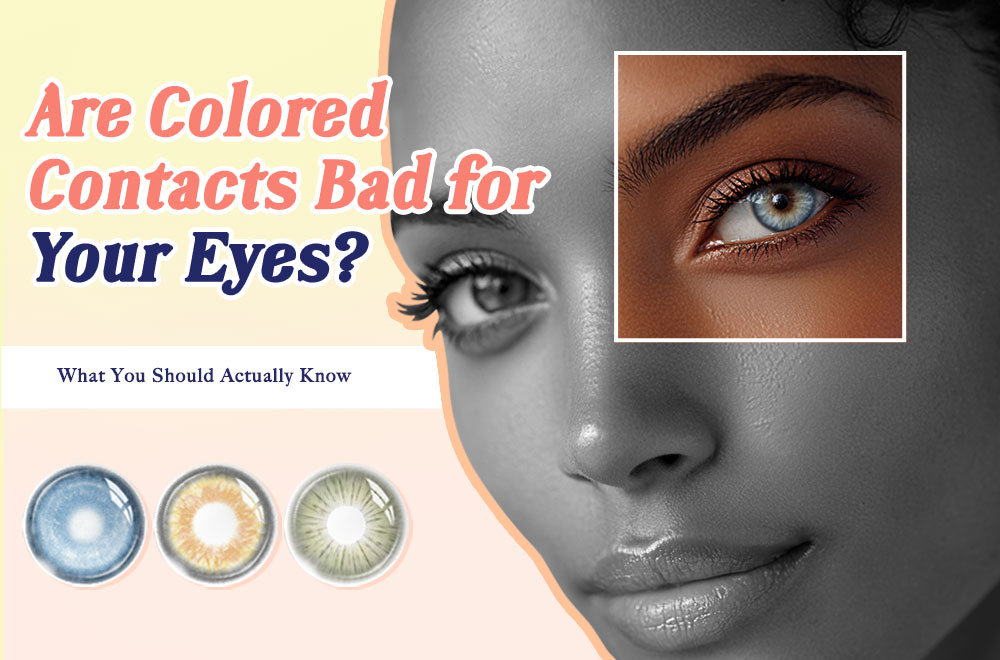
Colored contacts are more popular than ever, especially for natural beauty looks, cosplay, and everyday eye enhancement.
But many people still wonder:
Are colored contacts actually bad for your eyes?
The short answer is:
Colored contacts are not necessarily bad for your eyes if they are worn correctly and purchased from reliable brands.
Most problems come from:
- poor hygiene
- overwearing lenses
- low-quality products
- or using lenses incorrectly
This guide explains how colored contacts affect your eyes, how to wear them safely, and what to look for when choosing comfortable daily lenses.
Quick Answer
Colored contacts are generally safe when:
- properly fitted
- cleaned correctly
- replaced on schedule
- purchased from trusted brands
Unsafe use — not the color itself — is usually what causes eye irritation or damage.
Why Some Colored Contacts Cause Problems
Many issues happen because people:
- sleep in lenses
- wear them too long
- skip cleaning
- buy low-quality lenses
- ignore dryness or discomfort
Cheap lenses with poor material or rough edges can also reduce comfort.
That’s why breathable material and proper hydration matter just as much as color.
Are Colored Contacts Different From Regular Contacts?
Colored contacts work similarly to clear contacts.
The main difference is that they contain pigment inside the lens design.
High-quality colored contacts are designed so the pigment does not directly touch the eye.
Modern daily-style colored lenses are often made with:
- breathable material
- moisture retention
- soft edges
- lightweight design
Natural-style collections like those from GleGlow focus heavily on comfort and wearable daily designs in addition to realistic color blending.
What Makes Colored Contacts More Comfortable?
The most comfortable colored contacts usually include:
- soft lens material
- balanced water content
- smooth edge design
- natural fit
- breathable construction
Comfort can also depend on:
- lens diameter
- replacement cycle
- wearing time
- eye sensitivity
How to Wear Colored Contacts Safely
1. Wash Your Hands First
Always clean your hands before touching lenses.
2. Don’t Wear Lenses Too Long
Overwearing contacts is one of the biggest causes of dryness and irritation.
3. Replace Lenses on Schedule
Daily, monthly, and yearly lenses all have different replacement timelines.
Never continue using expired lenses.
4. Clean Lenses Properly
If using reusable lenses:
- clean them daily
- use fresh solution
- store them correctly
5. Stop Wearing Them If Your Eyes Hurt
Discomfort, redness, or blurry vision should never be ignored.
Which Colored Contacts Are Best for Everyday Wear?
For daily use, many people prefer:
- soft grey lenses
- warm brown contacts
- hazel colored contacts
Natural everyday shades usually feel easier to wear because they:
- blend better in daylight
- work with minimal makeup
- feel less visually intense
That’s why many daily collections — including GleGlow natural styles — focus on soft-tone grey, brown, and hazel lenses.
Are Colored Contacts Safe for Beginners?
Yes — if beginners:
- start with natural tones
- follow hygiene rules
- avoid overwearing
- choose comfortable lens material
Brown, hazel, and soft grey are usually the easiest starting points because they look natural and feel less dramatic.
Product Natural Mention
Many modern brands now focus on balancing both realism and comfort.
For example, GleGlow’s natural collections are designed with:
- soft blended colors
- lightweight daily styles
- wearable enlargement
- natural iris patterns
Popular styles like:
are often chosen by users looking for comfortable everyday enhancement rather than dramatic transformation.
Related Guides
- Most Comfortable Colored Contacts for Daily Wear
- Best Natural Colored Contacts
- Do Colored Contacts Look Natural
- Most Natural Colored Contacts for Dark Eyes
- How to Choose Natural Colored Contacts
FAQs
Are colored contacts bad for your eyes long term?
Colored contacts are generally safe long term if worn correctly and replaced on schedule.
Can colored contacts damage your eyesight?
Improper use may cause irritation or infection, but high-quality lenses used safely should not damage eyesight.
Why do colored contacts feel dry sometimes?
Dryness can happen from overwearing lenses, low hydration, or poor-quality material.
Are colored contacts safe for daily wear?
Yes. Many modern colored contacts are designed specifically for comfortable everyday use.
Which colored contacts are most comfortable?
Soft brown, hazel, and grey lenses are often preferred for daily comfort and natural wear.
Do natural colored contacts feel more comfortable?
Natural-style lenses are often designed for longer daily wear and softer visual blending, which many users find more comfortable.
Final Thoughts
Colored contacts themselves are not necessarily bad for your eyes.
Most problems happen because of improper wear, poor hygiene, or low-quality lenses.
Choosing breathable, comfortable designs and following proper lens care habits makes a huge difference — especially for daily wear users looking for natural enhancement.