
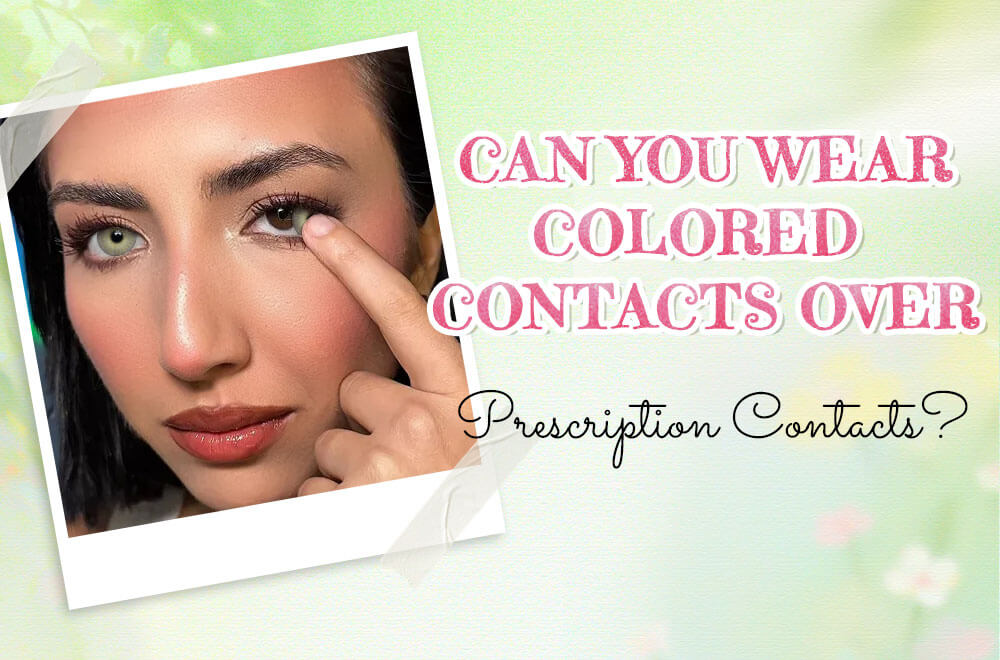
Many people love the idea of changing their eye color but still need vision correction.
This often leads to a common question:
Can you wear colored contacts over prescription contacts?
At first, it may seem like a simple solution:
- wear clear prescription contacts first
- place colored contacts on top
- enjoy both clear vision and a new eye color
However, that's not how contact lenses are designed to work.
In most cases, wearing colored contacts over prescription contacts is not recommended and can increase the risk of discomfort, irritation, and vision problems.
This guide explains:
- why stacking contact lenses is unsafe
- better alternatives for vision correction
- how prescription colored contacts work
- and how to choose natural-looking colored contacts for everyday wear
Quick Answer
No.
You should not wear colored contacts over prescription contacts.
Contact lenses are designed to sit directly on the eye, not on top of another lens.
If you need vision correction and want colored contacts, prescription colored contacts are usually the safest and most comfortable solution.
Why People Ask This Question
Many colored contact shoppers discover a style they love but realize it only comes in plano (0.00) power.
Others already wear prescription contacts and wonder if they can simply layer a cosmetic lens over them.
The goal is understandable:
- clear vision
- eye color enhancement
- convenience
Unfortunately, layering contacts creates more problems than solutions.
Why You Shouldn't Stack Contact Lenses
Reduced Oxygen Flow
Your cornea receives oxygen directly from the air.
When two lenses sit on the eye at the same time, oxygen transmission can be reduced.
This may increase:
- dryness
- irritation
- discomfort
Poor Lens Stability
Colored contacts are designed to sit directly on the eye surface.
When placed over another lens, they may:
- move unexpectedly
- rotate incorrectly
- create blurry vision
Increased Eye Irritation
Two contact lenses create additional friction.
This can result in:
- discomfort
- redness
- foreign body sensation
especially during long wear periods.
Vision Quality Issues
Layering lenses may affect:
- focus
- clarity
- depth perception
The result can be less stable vision than using a properly fitted prescription colored contact lens.
What Are Prescription Colored Contacts?
Prescription colored contacts combine:
- vision correction
- cosmetic color enhancement
into a single lens.
Instead of wearing two lenses, one lens performs both functions.
These lenses are available in:
- nearsighted prescriptions
- farsighted prescriptions
- some astigmatism prescriptions
depending on the brand and product line.
The Better Alternative: Prescription Colored Contacts
If you need vision correction and want to change your eye color, prescription colored contacts are usually the best option.
Benefits include:
One Lens Instead of Two
Simpler and more comfortable.
Better Oxygen Flow
The eye only supports a single lens.
Improved Stability
The lens sits properly on the eye surface.
Better Vision
Prescription correction and color enhancement work together as intended.
Can You Wear Glasses with Colored Contacts Instead?
Yes.
Many people choose:
- plano colored contacts
- prescription glasses
This combination allows:
- color enhancement
- clear vision
- safer lens wear
For some users, this is the easiest solution.
Best Colored Contact Colors for Everyday Wear
Whether you choose prescription or non-prescription colored contacts, natural shades remain the most popular.
Grey Contacts
Soft brightening effect that works well on dark eyes.
Hazel Contacts
Natural warmth and dimension.
Brown Contacts
Subtle enhancement for everyday wear.
Green Contacts
Visible color change while remaining wearable.
These shades generally look more natural in daylight and are easier to pair with makeup and fashion.
What Makes Colored Contacts Look Natural?
The most realistic lenses usually feature:
- layered pigment
- realistic iris patterns
- soft edge blending
- balanced opacity
Natural-looking colored contacts enhance your existing eye color instead of completely masking it.
Popular Natural Styles from GleGlow
Many contact lens wearers today prefer realistic enhancement rather than dramatic transformation.
GleGlow focuses on:
- natural color transitions
- soft blending
- wearable everyday shades
- realistic iris detail
Popular styles include:
Wolf Gray
A soft grey lens designed to brighten dark eyes naturally.
Dioren Brown
A hazel-brown blend that creates subtle warmth and depth.
Vaelis Hazel
Natural enhancement for daily wear.
Four-Leaf Whisper
Muted green tones that provide noticeable yet realistic color change.
These styles are often chosen by wearers who want natural-looking results while maintaining comfort throughout the day.
Who Should Consider Prescription Colored Contacts?
Prescription colored contacts are ideal for:
Daily Contact Lens Wearers
People who already rely on contacts for vision correction.
First-Time Colored Contact Users
Those looking for a convenient all-in-one solution.
Natural Beauty Enthusiasts
Users seeking subtle eye enhancement.
Fashion and Makeup Lovers
People who want lenses that complement their personal style.
Related Guides
- Colored Prescription Contacts for Astigmatism
- Non Prescription Colored Contacts for Dark Eyes
- Are Colored Contacts Bad for Your Eyes?
- Most Natural Colored Contacts for Dark Eyes
- Best Natural Colored Contacts
FAQs
Can I wear colored contacts on top of regular contacts?
No. Contact lenses should not be layered unless specifically advised by an eye care professional.
Why can't you stack contact lenses?
Stacking lenses may reduce oxygen flow, affect lens stability, and increase discomfort.
What if my favorite colored contacts don't come in my prescription?
You may consider wearing glasses with plano colored contacts or finding a similar prescription colored lens.
Are prescription colored contacts safe?
Yes, when fitted correctly and worn according to instructions.
Can prescription colored contacts look natural?
Absolutely. Grey, hazel, brown, and green shades often create realistic enhancement.
What's the safest way to wear colored contacts if I need vision correction?
Prescription colored contacts are generally the safest and most convenient option.
Final Thoughts
If you've ever wondered whether you can wear colored contacts over prescription contacts, the safest answer is usually no.
Rather than layering lenses, consider prescription colored contacts or pairing plano colored contacts with glasses. These options provide better comfort, clearer vision, and a safer wearing experience while still allowing you to enjoy natural-looking eye color enhancement.