
Understanding Your Starting Point
The secret to natural-looking colored contacts starts with knowing your base eye color. Many people choose lenses based on appearance alone. But the natural pigment of your eyes strongly influences the final result.
Your natural eye color determines how much coverage a lens must provide. Light eyes, such as blue, gray, or green, have less pigment. This means subtle lenses can shift the shade easily. Dark eyes contain more melanin. Because of this, they require a stronger lens opacity to create a visible color change.
Why Your Natural Shade Determines Lens Type
Your natural iris color affects how the lens pigment blends with your eye. When the base color is light, the lens tint simply enhances the shade. When the base color is dark, the lens must cover the natural pigment first before the new color becomes visible.
This is why selecting the correct lens category is essential for achieving a natural result.
Enhancement vs. Opaque Lens Technology
Colored contact lenses usually fall into two main categories.
Enhancement lenses are designed for light eyes. These lenses are slightly translucent and deepen or modify the existing shade without fully covering it.
Opaque lenses are designed for darker eyes. They contain dense pigments that completely mask the natural iris color. This makes them ideal when selecting color contacts for dark eyes, as the natural brown pigment needs stronger coverage to achieve the desired transformation.
Understanding these two technologies helps ensure the final result looks realistic rather than artificial.
Best Colored Contacts for Light Eyes (Blue, Green, Gray)
Light eyes offer more flexibility when experimenting with color. Because the iris pigment is lighter, many lens styles blend naturally without requiring strong opacity.
Enhancement Tints for Subtle Color Shifts
Enhancement tints are the most popular option for light eyes. These lenses add depth rather than replacing the natural color.
For example, blue eyes may appear deeper sapphire. Green eyes may shift toward emerald. These subtle changes maintain the natural iris pattern while creating a refreshed look.
Because enhancement lenses are semi-transparent, they blend with the natural eye color rather than covering it.
Vivid Shades for Dramatic Transformation
People with light eyes can also experiment with bold colors. Shades like turquoise, violet, or honey can create dramatic results.
Even with vibrant lenses, the natural eye color still influences the final appearance. This blending effect often makes bold colors appear more realistic on lighter eyes.
How Limbal Rings Add Definition to Light Eyes
Another feature that enhances light eyes is the limbal ring.
The limbal ring is the darker edge around the iris. Contact lenses that include this detail can make the eyes appear larger and more defined.
Natural-looking colored lenses often include subtle limbal rings to replicate the structure of the natural iris and improve realism.
Choosing Colors for Medium Brown Eyes
Medium brown eyes fall between light and very dark shades. Because of this, semi-opaque lenses typically provide the most balanced result.
Semi-Opaque Lenses That Blend Naturally
Semi-opaque lenses allow a small amount of the natural iris color to show through. This creates a blended effect rather than a fully replaced color.
This type of lens is often ideal for those experimenting with color contacts for dark eyes, especially when they want a noticeable color change without an overly dramatic transformation.
Hazel, Honey, and Green Options for Warmth
Warm shades often look the most natural on medium brown eyes.
Hazel lenses introduce golden tones that blend easily with the brown iris. Honey shades add brightness while maintaining warmth. Green lenses, particularly olive or forest shades, can create a natural yet noticeable shift in color.
Blue and Gray Choices for Striking Contrast
Cool shades like blue and gray create a stronger contrast against brown eyes.
These colors can significantly transform the appearance of the eyes while still maintaining a natural gradient if the lens includes multi-tone patterns.
Choosing designs with layered pigments helps prevent the iris from appearing flat or artificial.
Opaque Lenses for Dark Brown and Black Eyes
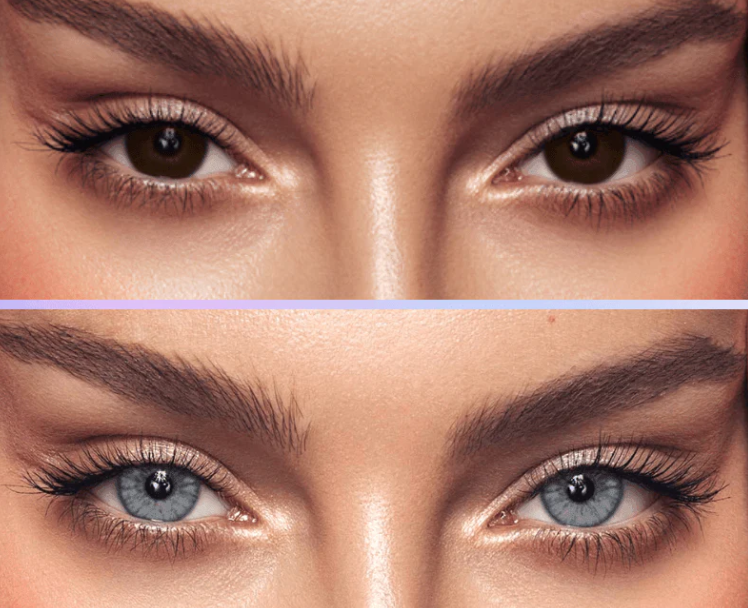
Very dark eyes require lenses with strong pigment coverage. Without sufficient opacity, the natural brown tone may show through the lens.
Why Maximum Opacity Is Essential
Dark brown and black irises contain high levels of melanin. Because of this, translucent lenses usually do not produce visible color changes.
Opaque lenses contain dense pigments that completely mask the natural iris color. This makes them the best option when selecting color contacts for dark eyes.
High opacity ensures that the new color appears vibrant and clear rather than muted.
Best Performing Colors for Dark Eyes
Certain lens colors perform better than others on darker irises.
Blue lenses often create the most noticeable transformation. Gray lenses provide a softer but still dramatic change. Green shades tend to look natural because they blend with the warmth of brown eyes.
Hazel lenses are another reliable option because they complement the natural undertones of darker eyes.
Avoiding Muddy or Washed-Out Results
To avoid dull or muddy colors, it is important to choose lenses with layered pigment patterns.
Multi-tone lenses mimic the natural texture of the iris. These designs help create depth and prevent the eyes from looking flat.
Selecting high-quality opaque lenses ensures the color appears vibrant while still looking natural.
Coordinating With Your Skin Tone and Hair Color
Eye color alone does not determine the final look of colored contact lenses. Skin tone and hair color also influence how natural the lenses appear.
Cool Undertones: Jewel Tones and Ash Shades
People with cool undertones usually have pink or bluish hues in their skin.
Jewel-toned lenses often complement these undertones well. Sapphire blue, icy gray, and cool emerald shades enhance the complexion without clashing with the skin tone.
Warm Undertones: Honey, Hazel, and Warm Greens
Warm undertones usually contain golden or peachy hues.
Honey, hazel, and warm green lenses tend to look more natural with this complexion. These colors enhance the warmth of the skin while maintaining balance in the overall look.
When choosing color contacts for dark eyes, selecting shades that match your undertone can transform your look far more naturally.
Creating a Cohesive and Believable Look
Hair color also affects how lens colors appear.
Dark hair often pairs well with bold lens colors that create contrast. Lighter hair shades typically work better with softer tones like hazel or green.
Matching eye color, skin tone, and hair color together creates a cohesive and believable appearance.
Testing and Trying Before Committing
Selecting colored contacts online can be difficult. The final appearance depends on many factors, including lighting, makeup, and individual eye pigment.
Virtual Try-On Tools and Their Limitations
Many brands offer virtual try-on tools that simulate how lenses might appear.
While these tools can help narrow down choices, they cannot perfectly replicate real-world conditions. Lighting and camera filters may alter the appearance of the color.
Because of this, the result may differ slightly from what you see online.
Ordering Sample Packs or Daily Lenses First
A practical approach is to test lenses before committing to long-term use.
Daily lenses or small sample packs allow you to experiment with different colors. This helps identify which shades look most natural and comfortable.
Many users exploring color contacts for dark eyes find that testing multiple styles helps determine the best opacity and color combination.
Understanding Lighting Effects on Appearance
Lighting can dramatically change how colored contacts appear.
Indoor lighting often softens colors, while sunlight can make them appear brighter. Studio photography used in product images may exaggerate color intensity.
Trying lenses in different lighting environments provides a more realistic understanding of how they will look in everyday situations.
Conclusion
Matching colored contacts to your natural eye color starts with understanding how iris pigment affects the final appearance.
Light-eyed individuals benefit from enhancement lenses that deepen the natural shade. Medium brown eyes often work best with semi-opaque lenses that create blended color transitions.
Dark brown or black eyes require fully opaque designs to achieve a noticeable transformation.
When choosing color contacts for dark eyes, opacity, color layering, and lens design all play an important role in achieving a natural look.
The most successful results come from selecting shades that complement your natural features rather than masking them completely.
With the right lens technology and color choice, colored contacts can enhance your eyes while maintaining a realistic appearance.
FAQs
Can I wear any colored contact regardless of my natural eye color?
Yes, but the final appearance will depend on lens opacity. Light eyes can use enhancement lenses, while darker eyes typically require opaque lenses for a noticeable color change.
What colored contacts look most natural on brown eyes?
Hazel, green, and honey tones often look the most natural on brown eyes because they blend well with the natural iris pigment.
Do enhancement tints work on dark eyes?
Enhancement lenses usually do not work effectively on dark eyes because they are semi-transparent. Opaque lenses are more suitable when choosing color contacts for dark eyes.
How do I know if a color will suit my skin tone?
Identify whether your skin has warm or cool undertones. Cool undertones often pair well with blue or gray lenses, while warm undertones typically match better with hazel or green shades.
Can colored contacts make my eyes look bigger?
Yes. Lenses that include limbal rings can create the illusion of larger eyes by adding contrast and definition around the iris.
Quick Picks for Medium and Dark Brown Eyes
Start with the result you want, because the same shade can look different over a brown iris.
- Natural or subtle: honey, hazel and warm brown tones blend softly for believable everyday definition.
- Visible but wearable: olive green and soft grey create a clearer color shift without looking costume-like.
- Bold: blue and other high-contrast shades make the strongest transformation.
Shop Colored Contacts for Dark Brown Eyes to compare lenses selected for visibility on deeper natural eye colors, then narrow by effect, color, prescription and replacement schedule.