

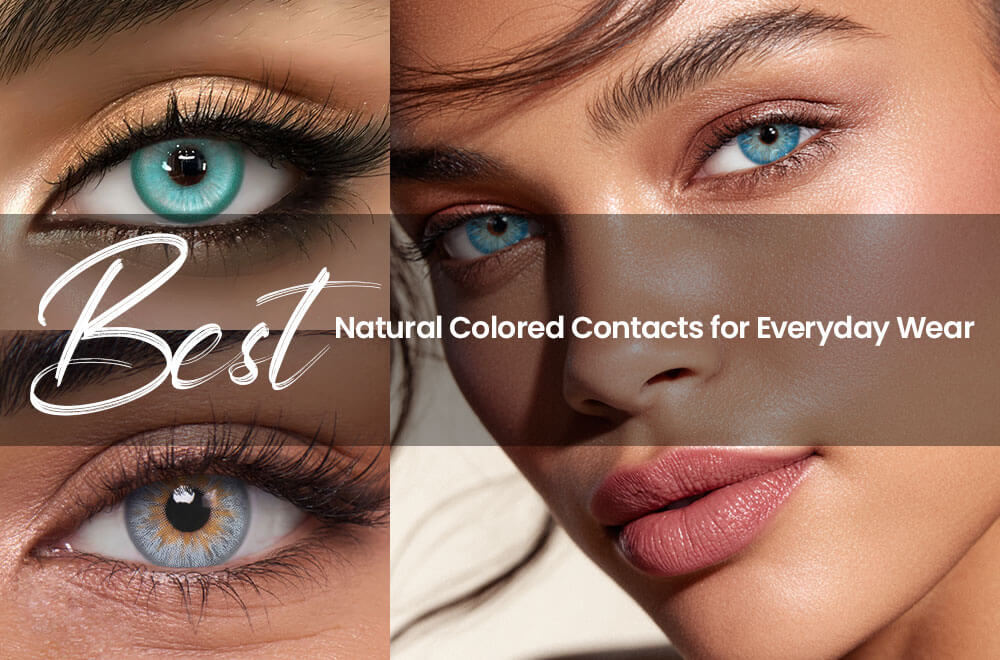
Choosing for everyday life? Start with the setting where you want to wear the lenses: office conversations, minimal-makeup days, or a subtle change on dark brown eyes. Compare the result in that lighting before choosing a shade. The shopping guide below connects each situation to a collection you can browse.
Build a Shortlist for Your Everyday Routine
Use the scene to narrow your comparison, then open the current product pages. These are starting points from GLEGLOW’s existing scene collections, not guarantees of a natural result, fit or wearing hours.
| Your situation | Candidate and collection | What to compare |
|---|---|---|
| Meetings and face-to-face conversations | Pure Hazel — 1 Year, 2 lenses Work & Office collection |
Full-face contrast and outer-ring definition with your usual workday styling. |
| No makeup or minimal makeup | Florescent Brown — 1 Year, 2 lenses No Makeup Days collection |
How much change you want from your bare iris. Product photos may include makeup; they are not a bare-face test. |
| A cooler color direction | Sepia Grey — 1 Year, 2 lenses Grey Colored Contacts |
Compare the whole-face result against a brown or hazel design, not only a close-up. |
| Deep brown starting eyes | Natural Contacts for Dark Brown Eyes Three-design comparison guide |
Look for a similar original iris and decide between a small change and a clearly visible shift. |
Compare two candidates in published full-face and close-up photos. Models, lighting, styling and crops can differ, and images may be edited. They are not a controlled same-wearer comparison or evidence of comfort.
From Everyday Shortlist to Cart
- Confirm a valid contact-lens prescription and professional fitting for the exact lens. In the United States, this includes zero-power cosmetic lenses.
- Open the product page and check the current Power for each eye, specifications and pack contents. Two lenses means two individual lenses, not two pairs. Confirm the pack configuration if your eyes need different Powers.
- Compare replacement and care routines in the daily vs yearly beginner guide. Everyday styling does not mean a lens is suitable for all-day or continuous wear.
- Read customer reviews and the prescription verification process, then check the product, Power and quantity in your cart.
For more focused help, use the office guide, without-makeup guide or grey comparison guide. Browse Everyday Eye Enhancement when you want to explore more color directions.
What Does a Natural Result Mean to You?
Decide whether you want your original eye color to remain recognizable, a little more definition, or a visible color change that still suits your usual styling. These are appearance preferences rather than a universal ranking. A grey, brown or hazel name alone cannot predict the result on your eyes.
Compare Two Candidates in Four Steps
1. Start with a similar bare eye color
Look for published photos that identify the wearer’s original iris color. A result shown on light eyes may differ from the result on deep brown eyes. If the starting color is unknown, treat the image as a styling reference rather than a prediction. On dark brown eyes, compare how much of the original iris remains visible and how noticeable the change is in each specific design.
2. Compare indoor and daylight images when available
Look for both ordinary indoor light and daylight examples of the same product. Exposure, white balance, flash, filters and editing can change apparent brightness and saturation. If comparable lighting examples are missing, there is more uncertainty; do not assume one polished photo represents every setting.
3. Check the full face as well as the close-up
A close-up helps you inspect the printed pattern and outer ring. A full-face image helps you judge the amount of contrast with skin tone, brows and your usual makeup. Compare similar framing and styling where possible. Different models or edited images do not form a controlled before-and-after test.
4. Inspect the outer ring, pattern and visible coverage together
Compare how clearly the outer ring is defined, whether the printed texture looks distinct at close range, and how the center blends with the wearer’s iris. Softer edges or muted colors may suit your preference, but no one pattern feature or opacity label guarantees a realistic result. A stronger ring can also be an intentional aesthetic choice.
Use Color Names as Browsing Directions
- Brown designs: compare the actual warmth, contrast and definition rather than assuming every brown lens will be a small change.
- Hazel designs: compare the balance of brown, gold and green visible in the individual product photos. Hazel does not guarantee subtle results on brown eyes.
- Grey designs: compare the full-face result and indoor brightness. Grey does not automatically brighten dark eyes naturally, and a muted shade is not universally more realistic than a brighter design.
Use the Pure Hazel, Florescent Brown and Sepia Grey links in the shortlist above to inspect their current product pages. If you want more options, browse Gleglow colored contacts and compare two designs at a time rather than choosing by color name alone.
Choose Appearance After Confirming Your Fitted Lens
A natural-looking pattern does not establish physical comfort, safe wearing time or suitability for beginners. Choose lens dimensions and the specific product through professional fitting; do not change diameter or base curve simply to achieve “moderate enlargement.” Printed appearance and clinical fit are separate considerations.
For your first order, choose the look you prefer among appropriately prescribed options and follow the product’s wearing and care instructions. Brown, hazel or grey is an aesthetic direction, not an easier or safer lens category.
Recommended Articles
Most Realistic Colored Contacts
Discover what makes some lenses look naturally beautiful.
Subtle Colored Contacts Guide
Learn how softer lens styles create wearable beauty enhancement.
Natural Colored Contacts for Brown Eyes
Find the best realistic shades for dark eyes.
Do Colored Contacts Look Natural?
Understand why some lenses blend better than others.
Turn Your Comparison into a Shortlist
Pick two candidates with photos relevant to your starting eye color and intended lighting. Note the amount of color change, outer-ring contrast and full-face effect you prefer. Then return to the product page to confirm the exact prescribed lens, current Power options, pack quantity and replacement instructions using the buying steps above.
If the available images do not answer your appearance question, keep that uncertainty in your decision rather than treating “natural” as a guaranteed result.