
Natural eye enhancement contact lenses are designed to create a subtle visual change rather than a dramatic color transformation. The result depends on the lens pattern, opacity, your natural iris color, lighting, and individual fit.
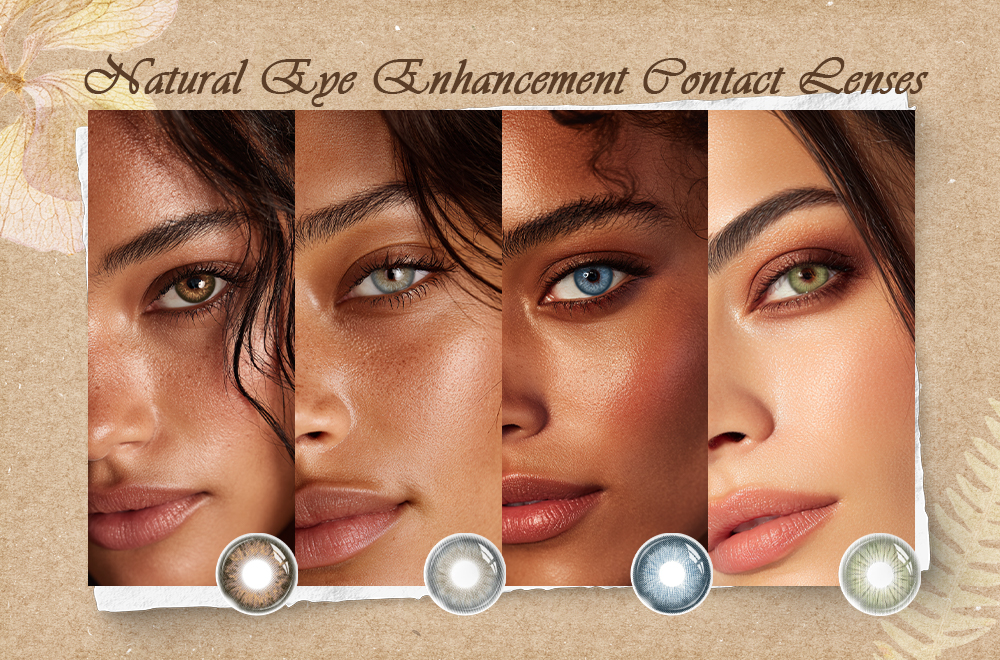
Why choose a natural enhancement style?
Enhancement designs can add visible definition, gentle color variation, or a softer edge around the iris. They do not guarantee a particular result: the same lens may appear different across eye colors, lighting conditions, cameras, and screens.
- For a subtle effect, compare customer photos taken in different lighting.
- Look at the lens pattern and opacity rather than relying on the color name alone.
- Use the listed diameter and prescription parameters to discuss suitability with your eye-care professional.
How design affects the appearance
Limbal-ring strength
A softer outer pattern generally creates less visible contrast, while a stronger ring can create more definition.
Color transition
Feathered or layered patterns can create a gradual transition between the printed design and the natural iris.
Opacity
Lower-opacity designs allow more of the natural iris to remain visible. Higher-opacity designs may create a more noticeable color change. Neither option determines comfort, fit, or prescription suitability.
For a deeper explanation of these design features, read Natural Eye Enhancement Lenses: What Makes Them Look So Real?
GLEGLOW natural enhancement examples
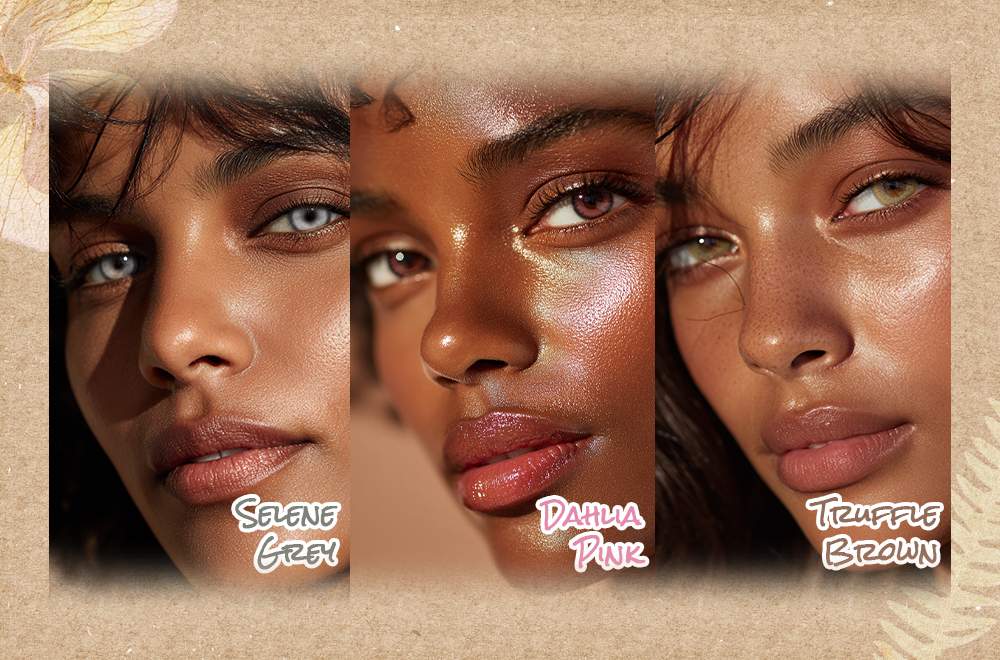
Selene Grey Daily
A grey daily option for shoppers comparing a cooler-toned visual effect. Check the product page for the currently available specifications and prescription powers.
Truffle Brown 10pcs
A brown daily option for shoppers comparing a warmer visual effect. Review product images and the listed specifications before choosing.
Browse more options in the Natural Enhancement Collection or the Daily Collection.
Choosing for real-world situations
Indoor light, daylight, camera exposure, makeup, and natural iris color can all change how a lens appears. Compare several customer images where available and choose according to the visual effect you prefer—not a promise that a color will look identical on every wearer.
- Work or everyday styling: consider a lower-contrast pattern if you prefer a less noticeable change.
- Photos and video: review product images in lighting similar to where you plan to wear the lenses.
- Dark irises: opacity and pattern placement may affect how visible the color appears.
Prescription, fitting, and safety
Color effect and replacement schedule do not determine whether a lens fits your eyes. For U.S. customers, all contact lenses—including 0.00/Plano decorative lenses—require a valid contact lens prescription and professional fitting. A 0.00/Plano lens has no corrective power; it is not prescription-exempt.
Use Prescription Verification when ordering. GLEGLOW lenses are FDA Approved and produced in CE-certified facilities.
Follow your eye-care professional's instructions and the replacement schedule shown on the product page. Do not sleep or nap in GLEGLOW colored contacts. Stop wearing the lenses and contact an eye-care professional if you experience pain, redness, or vision changes.
Shopping, reviews, and U.S. delivery
Explore All Contacts, read Customer Reviews, or view GLEGLOW's Trustpilot profile. The Trustpilot rating is not fixed in this article so it can remain aligned with the official page.
ANY 5 FOR $55 applies only to eligible regular-price YEARLY, MONTHLY, and 6-MONTH styles. Daily lenses are excluded.
For U.S. customers, orders with complete prescription information are generally processed within 24 business hours. Estimated delivery is typically 9–15 business days after dispatch. A dispatch email is sent when the order ships, and tracking can be checked through Order Status. This delivery estimate is stated only for U.S. customers.
Final thoughts
Natural enhancement lenses are best compared by visual design, product specifications, and how the effect appears on your own iris. Choose the look you prefer, then confirm prescription and fit with an eye-care professional before purchase.